
How Eagle Residents Are Found
A useful Eagle residents directory search begins with the kind of fact already known. An address points first to the Ada County Assessor. A full name may fit the Recorder, iCourt, voter tools, or a public business record. An older address belongs in directories, newspapers, maps, and archives. None of these sources is a complete household list. Owners may live elsewhere, renters may not appear, and protected records stay closed.
Move from a broad lead to a record with a firm link to Eagle. Then confirm the match in a second, independent source. The strongest pairings combine a parcel number or legal description with a recorded instrument, or a case name with a county, date, and address.
- Search the county property roll by address, parcel, subdivision, and year. Open the parcel card and note the owner, situs address, mailing address, and legal description.
- Use the owner or prior party name in the Recorder index. Try spelling variants, initials, and both grantor and grantee roles.
- Check Idaho iCourt when a court case may confirm the person, county, filing date, or party role. A public index is not the whole case file.
- Use VoteIdaho for the voter's own record, or follow the Secretary of State request route for a permitted public voter report.
- For an older household, ask for the right directory year, obituary entry, newspaper run, census, or archive series instead of assuming all years are online.
When a portal fails, use the counter, phone, mail, library request, archive request, or a narrow Idaho Public Records Law request. An empty web result can be a technical limit, an index gap, or a protected record.
Offices Behind Eagle Resident Records
Eagle is an incorporated Ada County city, but Boise is the county seat. That division matters. City Hall keeps municipal permits, minutes, contracts, and fulfilled requests. County offices hold the property, deed, court, and election records that do most of the work in a residents directory. State agencies control certified vital records, statewide courts, licensing, businesses, and voter access.
The Recorder and city offices are open Monday through Friday from 8 a.m. to 5 p.m. The Assessor's public site accepts an address but not an owner name, so the search path often begins with the parcel before moving to a name index.
The Eagle Clerk/Treasurer's office page gives the city address, public-record route, and records-management role.
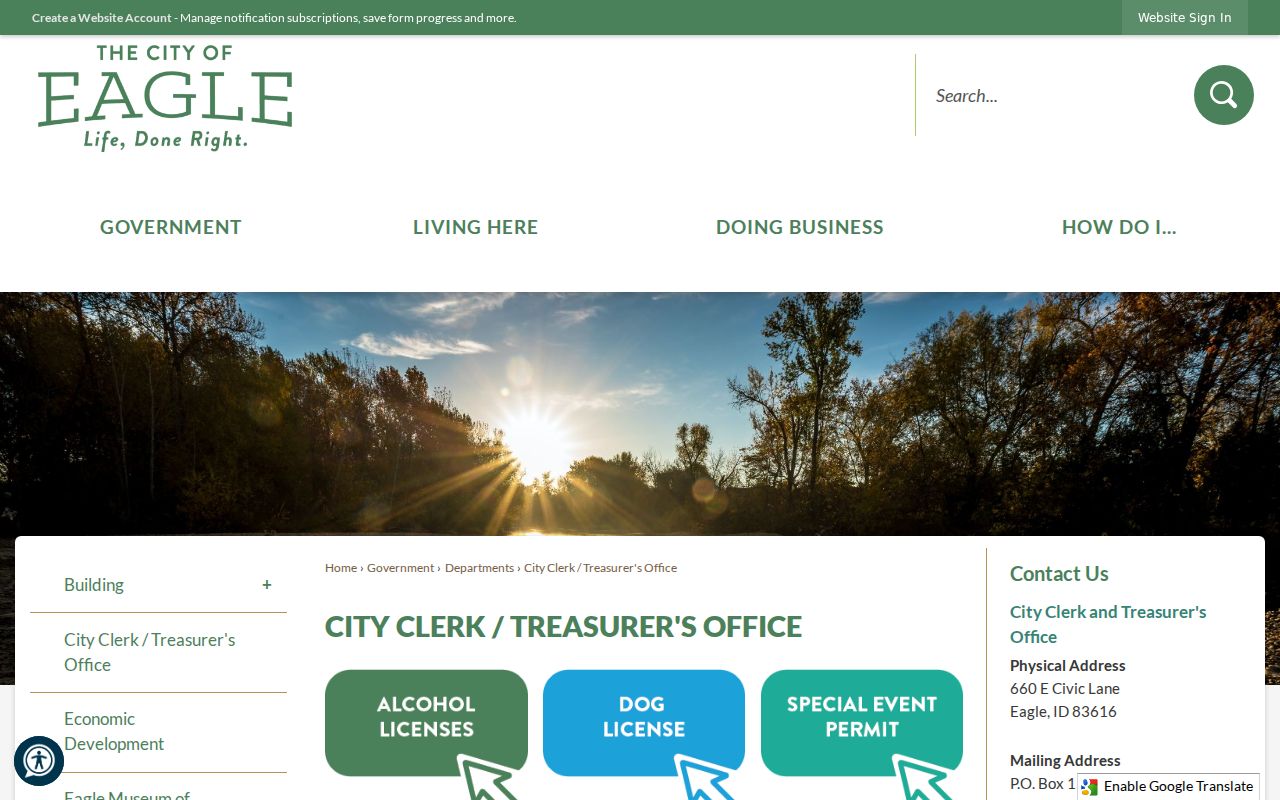
The Clerk can route a narrow city request when Laserfiche, Granicus, and the fulfilled-request archive do not contain the record.
Eagle Property Roll Search
The Ada County Assessor Property Lookup is the best first stop for an Eagle street address. It connects the address to a parcel, legal description, primary owner, tax-roll mailing address, value year, property traits, and a map. The site intentionally omits owner-name searching. This is a local privacy quirk with a practical effect: start by address, parcel, or subdivision, then read the owner from the returned card.
| Search field | Accepted input | Use in an Eagle directory search |
|---|---|---|
| Address | All or part of number, direction, street name, and type | Find the parcel at a known Eagle site |
| Parcel | Full or partial county parcel number | Keep one property tied across systems |
| Subdivision | Full or partial subdivision name | Browse a named development without guessing streets |
| Year | Available assessment year | Check which year's property card is shown |
| Owner name | Not offered on the public site | Read the owner after opening a parcel result |
A situs address is the location of the parcel. A mailing address is where tax notices go. If they differ, that does not prove where the owner lives. The map is also an assessment aid, not a legal survey or fence-line decision.
The live Ada property search shows the address-first entry point used for Eagle.
The screen is a starting point for parcel research, while the Recorder's instruments supply the ownership transaction itself.
Eagle Deeds Link Names
The Ada County Recorder's Tyler index works like a public card catalog for recorded instruments. Its displayed online range ran from January 1, 1982 through August 9, 2026 when researched. It supports names, dates, instrument number, book and page, grantor, grantee, parcel, legal-description parts, and document type. The index is not the document. Some deed, lien, judgment, trust, probate, reconveyance, and power-of-attorney classes require staff help even when the index is visible.
- Grantor
- The party transferring or granting an interest.
- Grantee
- The party receiving that recorded interest.
- Index
- A finding aid that points to an instrument, not a certified copy.
- Parcel
- The county identifier for a piece of assessed property.
- Legal description
- The lot, block, subdivision, or survey language that identifies land.
Older material may be at the Recorder counter, on microfilm, or at the Idaho State Archives. Ada County has described a project to redigitize and index records from 1864 through 1996, which helps explain why a web cutoff is not the same as the start of county records.
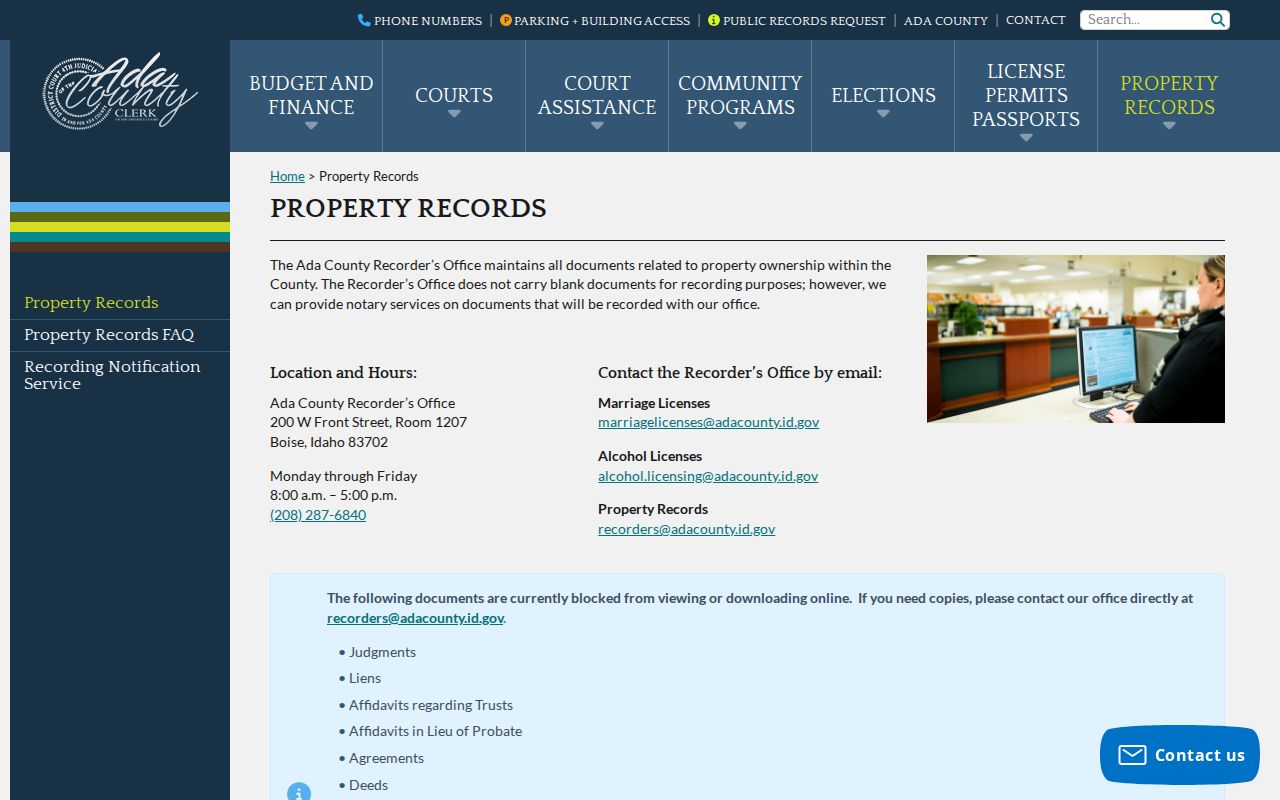
Ada County's property-records page explains the official search and staff route.
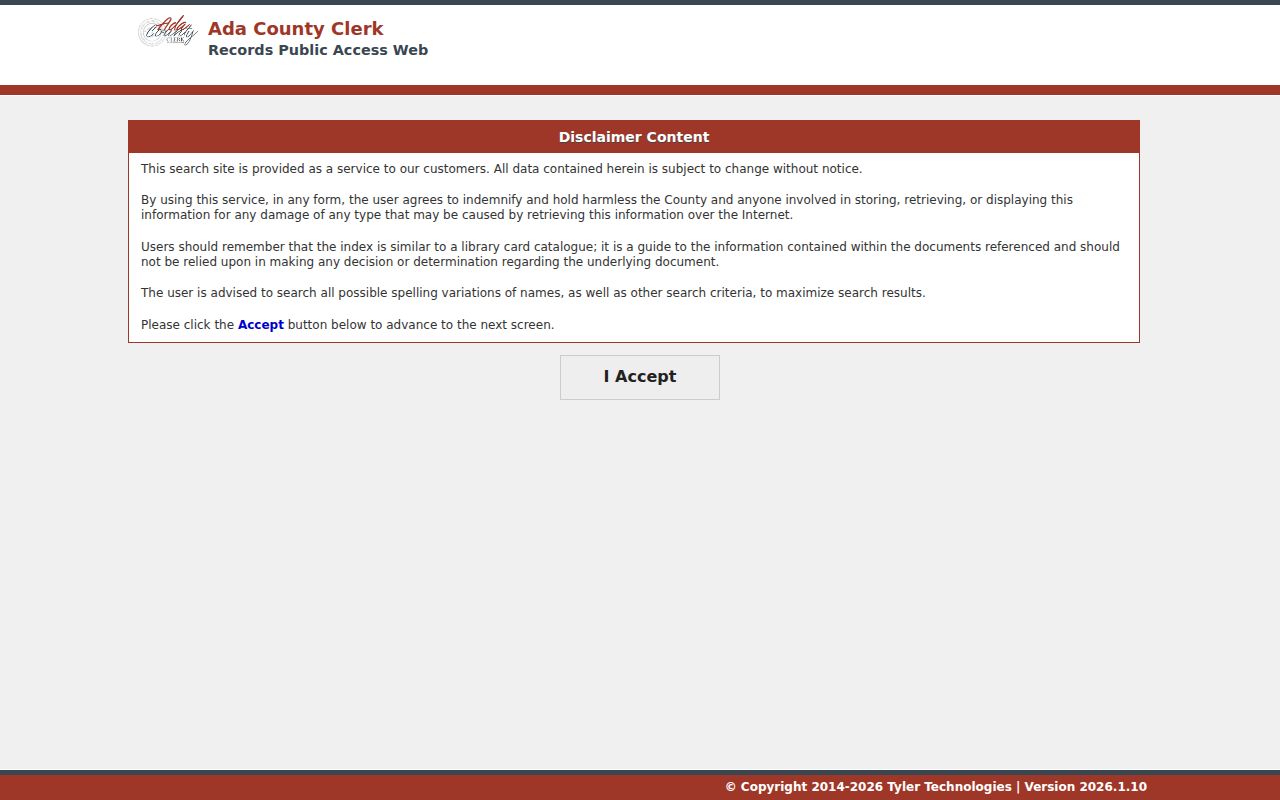
The portal entry leads to the index, but a copy or certified record must come through the Recorder's approved access channel.
Current Eagle Residents Directory Sources
Current Eagle names appear in separate official systems for separate reasons. The source must match the question. Ownership belongs to the parcel roll and deeds. Court involvement belongs to iCourt. Registration belongs to election records. A city staff or business listing shows a public role or affiliation, not a home.
| Eagle source | People represented | Custodian | Access route |
|---|---|---|---|
| Property roll | Primary parcel owners | Ada County Assessor | Free address, parcel, subdivision, and year search |
| Official records index | Parties to recorded instruments | Ada County Recorder | Online index, counter, phone, and copies |
| Voter record | Registered voters | Idaho Secretary of State and Ada Elections | Personal lookup or permitted report request |
| iCourt | Parties in public Idaho cases | Idaho courts and Ada County Clerk | Smart Search, courthouse kiosk, or ICAR 32 request |
| City staff directory | Public Eagle staff contacts | City of Eagle | Category and name search |
| Business directory | Listed firms and public contacts | City of Eagle | Business name and category search |
Official sources explain why a name appears and who keeps it. Commercial people-finder products combine data from many places, may charge for uncertain matches, and are not substitutes for a custodian's record. For a focused name-first process, use the Eagle resident lookup.
Eagle City Records Repositories
Eagle City Hall uses three distinct public-record paths. Laserfiche stores collections such as building permits and city documents. Granicus handles agendas, meetings, video, and archive searching. JustFOIA exposes fulfilled request subjects and city responses. A no-match in one system should lead to a topic search in the other two before a new request is filed.
City records may tie a person to a permit, contract, campaign filing, agenda item, or civic role. They do not form a household roll. Weekly building-permit reports can preserve an address, applicant, parcel, permit type, and date, but Eagle says older residential plans may be destroyed under its retention rules.
Eagle's public-records hub identifies the city repositories and request route.
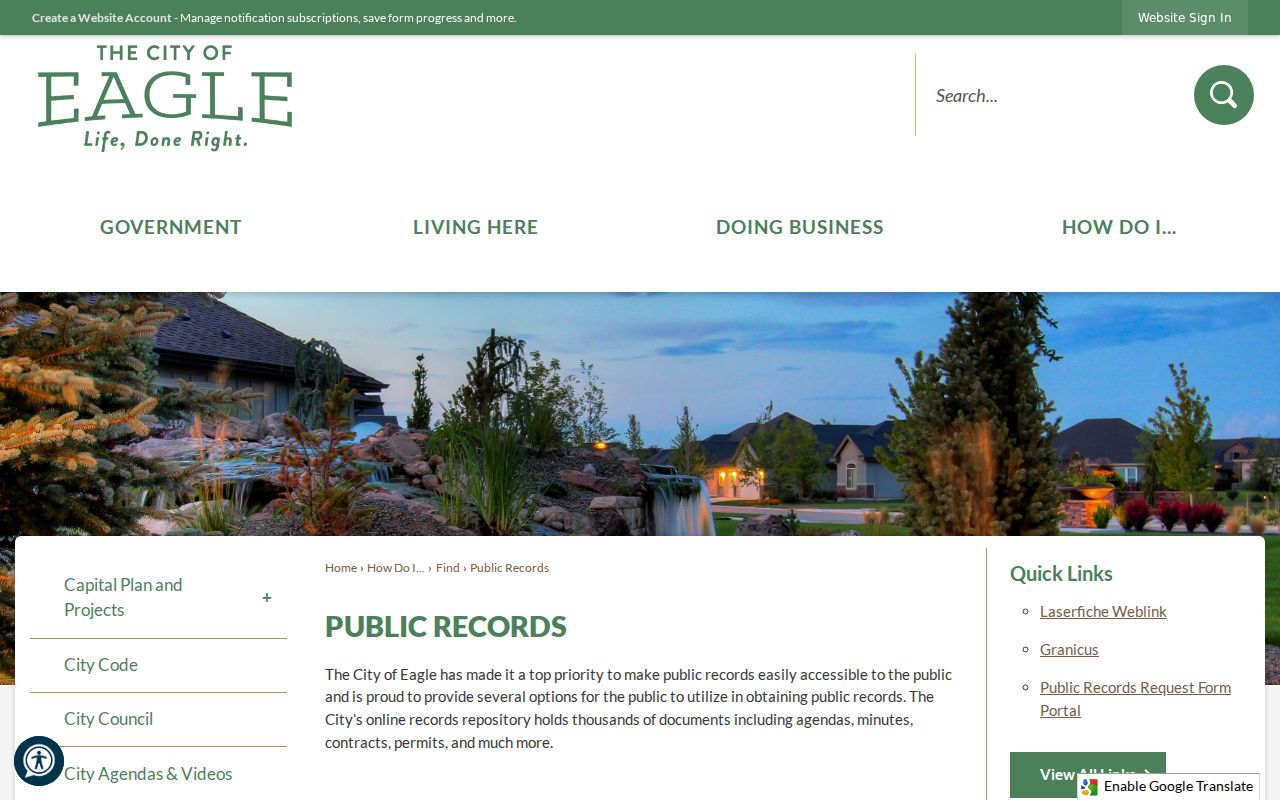
The hub separates online collections from a formal request, which keeps the search narrow and directs it to the right custodian.
Eagle's fulfilled-request archive can reveal whether a similar records request has already been answered.
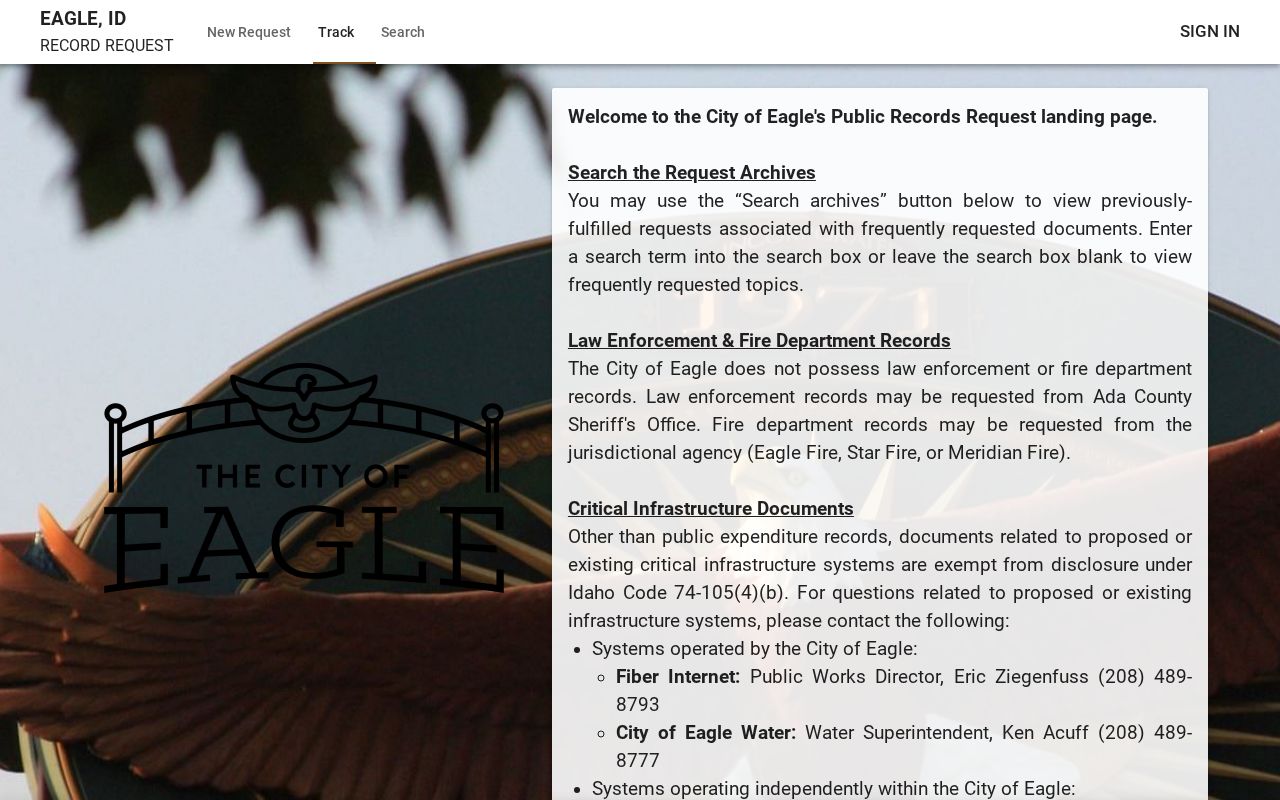
A prior response may supply useful wording or show which city division held the requested file.
Idaho Court Names for Eagle
Idaho iCourt Smart Search covers statewide public case information, including Ada County. Searchers can use a person's name with name syntax and wildcards, then inspect result tiles for party role, case number, court location, filed date, status, events, hearings, or financial details when public. Sealed and restricted records do not become open because the search is online.
A web failure has more than one cause. iCourt may require JavaScript, cookies, and CAPTCHA, and the researched interface warned of a modernization transition. For a complete public file, use the Ada County Clerk at the courthouse, a public-access kiosk, or a request under Idaho Court Administrative Rule 32.
The official Idaho courts entry directs Eagle searches to the current statewide portal.
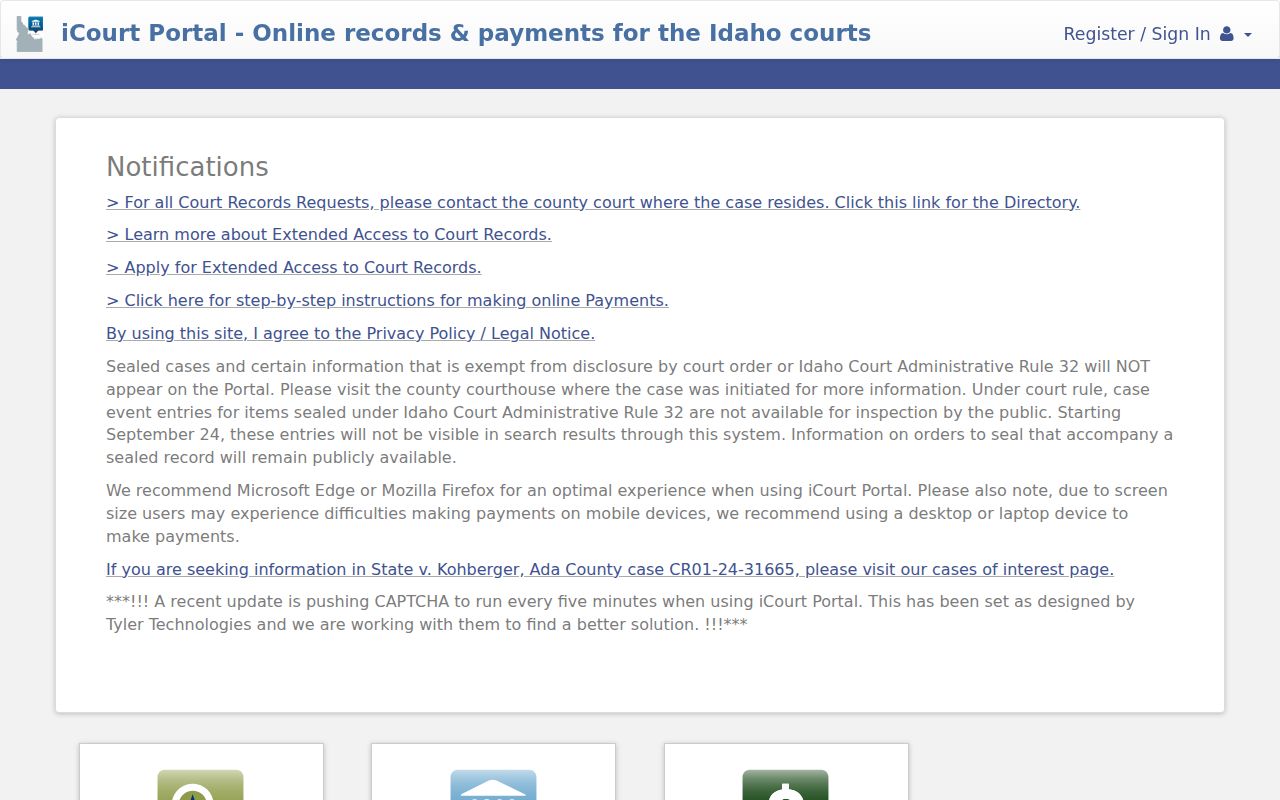
The statewide index is best used to confirm a case lead, not to infer facts about an unrelated person with the same name.
Eagle Voter Record Boundaries
VoteIdaho offers a “Check Your Voter Record” tool for a voter's own registration. Public voter-file and history reports use the Secretary of State request form. The research found public fields such as name, residence address, mailing address, party, precinct, registration date, status, participation history, and voter identification number, subject to law and the requested report. The signed registration card and protected data are not simply exposed as a web directory.
Idaho's Address Confidentiality Program gives qualifying survivors a substitute mailing address and confidential voter handling. A missing address can therefore reflect a safety rule, not a bad search. Voter information should be used only for lawful civic or personal purposes.
Eagle resident records must never be used to stalk, harass, threaten, or harm anyone. Respect sealed files, protected addresses, and custodian limits.
Requesting Missing Eagle Records
Idaho Public Records Law, Title 74, Chapter 1, governs requests to city, county, and state custodians. Eagle explains that a response is generally due within three working days, with a permitted extension to ten working days when more time is needed. The custodian may ask for a clearer description, apply lawful exemptions, or discuss fees for a large or labor-heavy request.
Name the office, record type, date span, address, parcel, case, or instrument as closely as possible. Ask for an existing record, not an answer to a broad question. City material should go first to the City Clerk and its repositories. Deeds belong with the Recorder, court files with the Clerk, parcel details with the Assessor, and state records with the agency that created them.
The Idaho Attorney General's records guidance explains rights, exemptions, fees, and the custodian process.
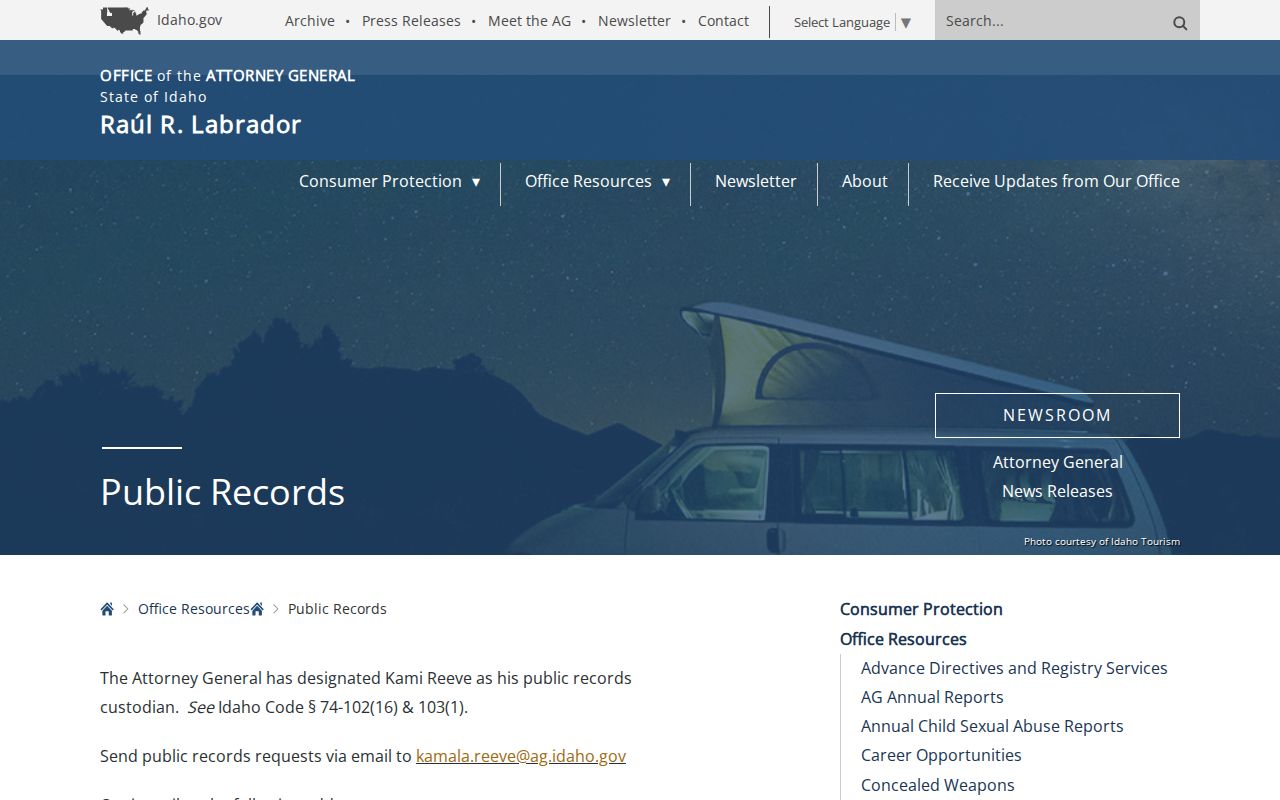
The guidance helps frame a focused request and shows why one state form cannot replace the record holder's own process.
Idaho's Department of Administration request form shows the identity, contact, record-description, residency, fee, and timing fields used by that agency.
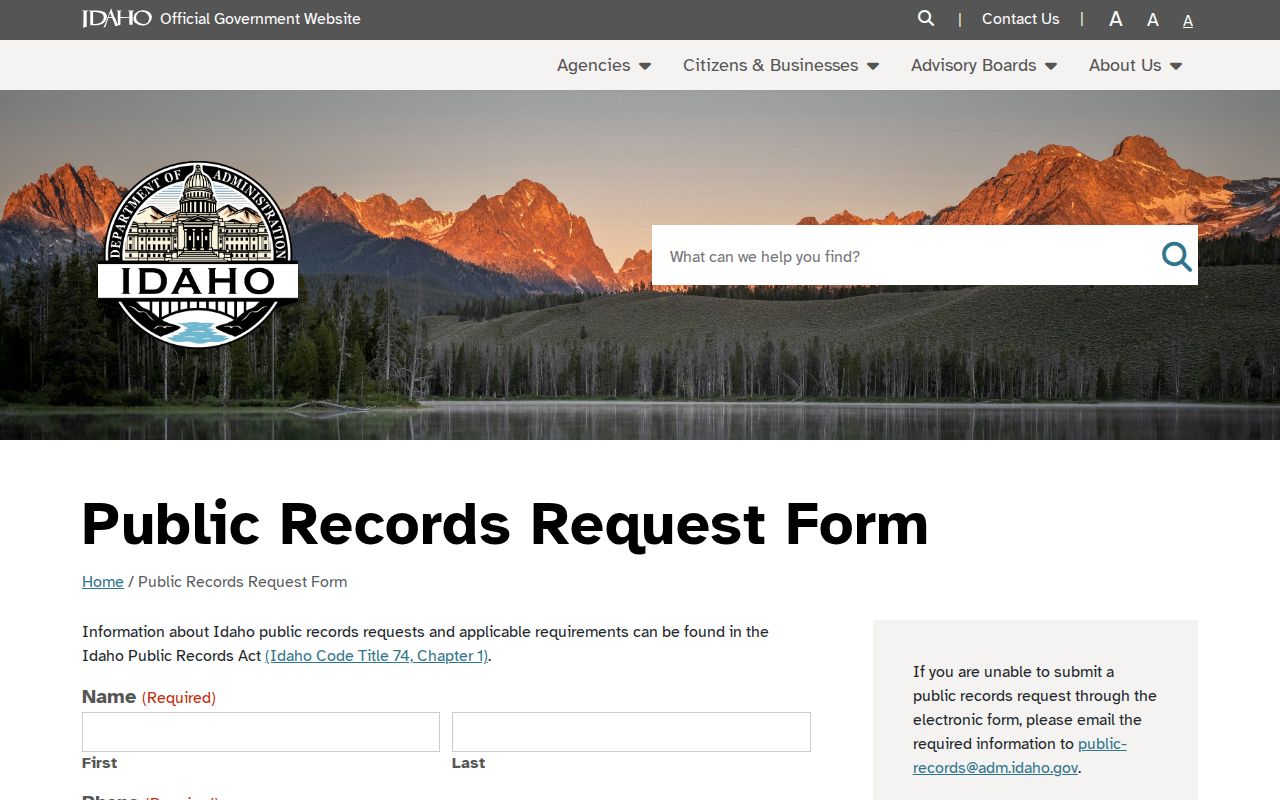
Use that form only for records held by the department; Eagle and Ada County records stay with their local custodians.
Eagle ZIP and City Lines
Official sources researched for Eagle identify ZIP code 83616, including the Eagle Post Office. A postal city and ZIP describe mail delivery, not incorporation. An address carrying “Eagle, Idaho” can sit outside Eagle's city boundary, so compare USPS normalization with the Ada County city-limits or tax-code layer before deciding which government holds a permit or city record.
County GIS fields may include ZIP+4, street-grid, and local address data, while the parcel card gives the situs and legal description. These keys serve different jobs. The legal description and parcel number are usually more stable than a mailing label when moving from an address into title records.
Historical Eagle Residents Directory
The historical shelf for Eagle is regional. The University of Idaho directory guide says “Eagle | See Boise,” and Boise Public Library's local-history room holds Polk city directories from 1891 to current, telephone books from 1948 to current, and Hill-Donnelly cross-reference volumes. Cross-reference, or criss-cross, directories arrange entries by street or phone rather than only by surname.
The same room offers an obituary index covering 1957 through 2017, maps, newspapers, and request help. Directory copies cost $1.25 per page with a five-page weekly limit. Obituary or article requests cost $5.25, with four requests per week. Ask for a precise year, locality, name, and page whenever possible.
The Idaho State Archives adds county and city records, microfilm, census, naturalization, newspapers, and reconstructed indexes. The Eagle Museum preserves local photos, pamphlets, oral histories, and walking-tour context. These collections are fully explored in the Eagle city directory research.
Eagle Records Across Time
A 1914 digitized Sanborn map supplies building footprints and use context, while the modern Ada GIS supplies parcels, value-year data, zoning, and legal descriptions. Neither proves who occupied a building. Pair the map with a directory year, deed, newspaper, obituary, census, or city permit to create a defensible timeline.
Eagle's newspaper record is not continuous. Research found Eagle Enterprise material for 1926 and 1958 through 1960, Valley Free Press in 1982, and Eagle Post from 1988 through 1989. A blank year is a collection gap, not proof that no notice was printed. The 1950 census is the newest federal population census open under the 72-year rule, while Idaho's reconstructed 1890 index gathers leads from records created between 1885 and 1894.
Safe Eagle Directory Checks
Public records can be copied into scams. Idaho courts have warned about fake court-record, jury, and payment messages, and state officials have described impersonation calls involving Ada County. Verify a demand through the agency's published contact page, not through a number or link supplied by an unsolicited caller.
Record freshness also matters. Check the year on a property card, the filing date on a case, the recording date on an instrument, and the update notice on a roster. Confirm an important fact with the custodian before relying on it.
Idaho's Address Confidentiality Program explains the substitute-address and safety process.

The program is a reminder that an official directory may lawfully omit or mask a person's home address.