
Eagle Directory Collections by Year
Eagle's historical shelf is regional. University of Idaho Special Collections routes Eagle researchers to Boise, while Boise Public Library's local-history room holds the strongest directory run. No verified public website offers a line-by-line Eagle city directory scan for every year. The sound method is to identify a volume, confirm that its locality statement includes Eagle or the Boise area, and ask to inspect the exact page and abbreviation key.
| Collection | Years | Where Held | Access |
|---|---|---|---|
| Polk city directories | 1891-current | Boise Public Library | Reference shelf and staff copies |
| Hill-Donnelly cross-reference | Official page lists 1969-1970, 1872-1991, 1993-2004 | Boise Public Library | Ask for a year and address page |
| Telephone books | 1948-current | Boise Public Library | Physical or staff-assisted access |
| Eagle Sanborn map | 1914 | University of Idaho Digital Initiatives | Free online map |
The listed spans describe holdings, not a promise that each volume contains Eagle. Staff can copy up to five directory pages per week at $1.25 per page. Give the year, locality, surname or address, and requested section. A vague request for an "Eagle directory" is harder to fill because the metro books and cross-reference volumes differ by date and coverage.
Eagle City Directories Live Regionally
The phrase "Eagle | See Boise" is an important catalog clue. It says to search Boise and regional telephone or business books, not to assume a stand-alone Eagle volume exists. That regional pattern fits Eagle's history. Ada County records predate Eagle's 1971 incorporation, and older residents may appear under a rural route, Boise-area heading, or county record.
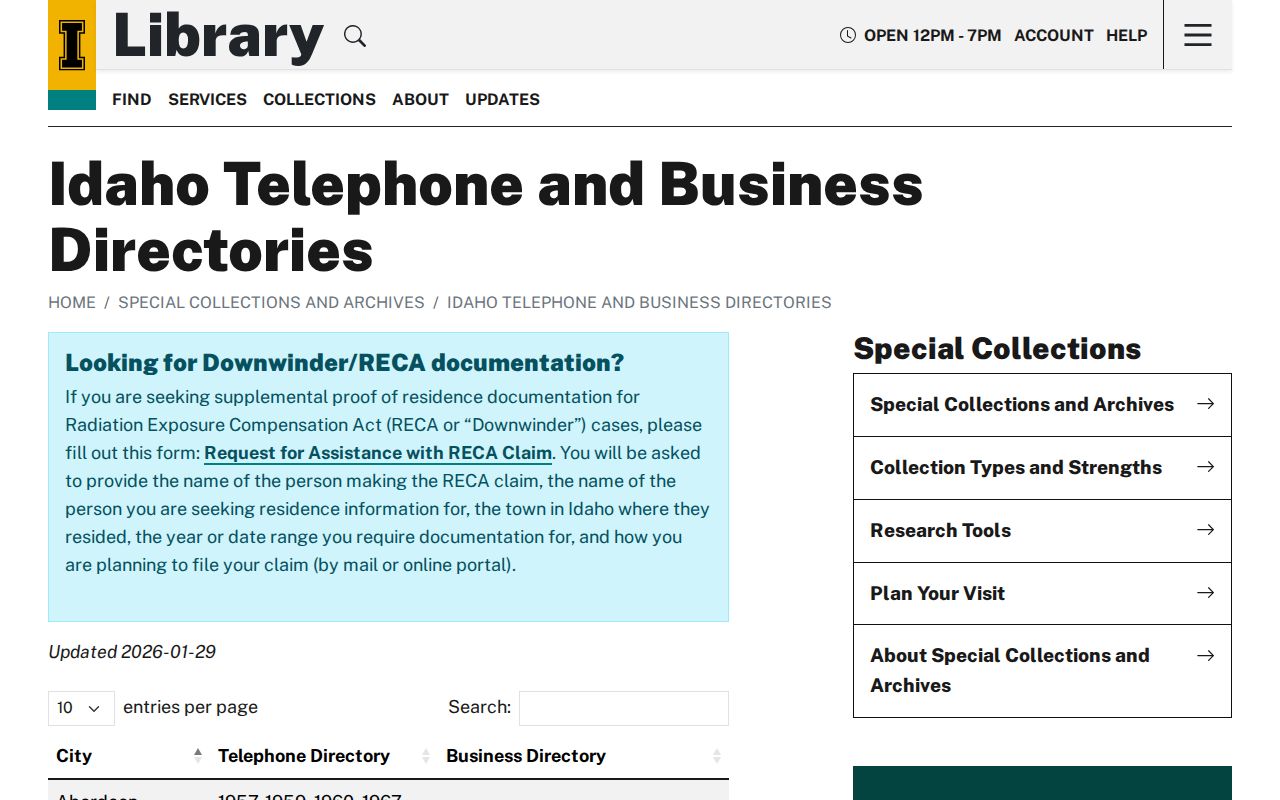
The University of Idaho directory holdings page records that regional routing.
The Eagle Public Library at 100 N Stierman Way can help with referrals, newspaper access, interlibrary loan, and Lynx consortium resources. Its published material does not claim a separate historic directory run. When the Boise shelf does not answer the question, the next stops are the Idaho State Archives reading room and the Eagle Museum, not an invented online index.
Use the catalog wording as evidence about collection structure. It is not evidence that a named person lived in Eagle. Only the actual volume page can support that claim.
Reading an Eagle Directory Entry
No official open scan exposed a complete Eagle entry during research, so common marks must be checked against each volume's own key. Photograph the title page, publisher, year, locality statement, abbreviation page, entry, and page number before drawing a conclusion. The inventory below is a checklist, not a claim that every Eagle city directory printed every field.
| Name | Exact spelling, initials, suffix, and any spouse or household notation |
|---|---|
| Work | Occupation or business only when the volume prints it |
| Address | House number, street spelling, and any residence mark |
| Status marks | Owner, renter, boarder, or widow notation only as defined by that book |
| Source details | Volume year, publisher, page, locality, and abbreviation key |
- Criss-cross directory
- A volume arranged by street address or phone number rather than surname.
- Householder index
- An address-order list of the person identified with a household.
- Abbreviation key
- The volume's own legend for shortened words and status marks.
A directory line is a dated lead. It may reflect when canvassing occurred rather than the publication date, and an omission can mean a move, an unlisted phone, a missed canvass, or limited geographic coverage.
Eagle Directory Gaps in Newspapers
The Idaho State Archives Research Library preserves short, uneven Eagle newspaper runs. Its list includes the Eagle Enterprise for one issue in 1926 and a run from June 1958 through January 1960, Valley Free Press from February through October 1982, and Eagle Post from August 1988 through September 1989. These papers can confirm a business notice, marriage, death, school event, civic role, or address near a directory date.
The gaps matter. A missing newspaper year does not show that no notice was published. It means the accessible microfilm run is incomplete. The Boise Library's Idaho Statesman obituary index, covering 1957-2017, offers a broader companion search. Staff copies cost $5.25 per request, with four obituary or article requests permitted each week.
Ask for a narrow date range and exact name variants. Idaho Archives warns that indexes can contain misspellings, so initials, former surnames, and alternate spellings deserve separate searches.
Eagle's 1914 Map Layer
A digitized 1914 Eagle Sanborn map supplies rare open, place-specific context when no city directory scan is available. It can show street labels, building footprints, rough materials, story counts, setbacks, and uses. It cannot prove title or occupancy.
The image below comes from that University of Idaho collection and should be read as building evidence beside directories, deeds, newspapers, and census schedules.
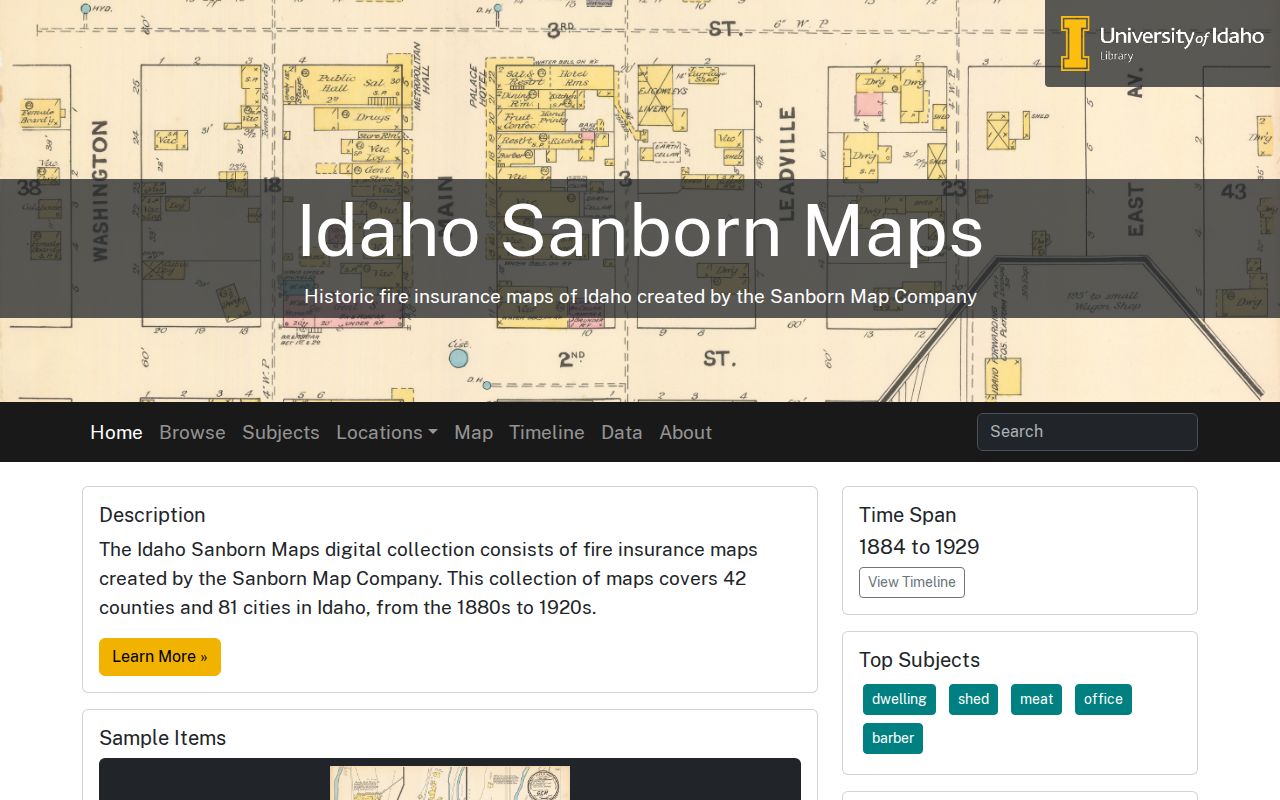
This contrast is useful: a map can show what stood there, while a directory may show the person or concern tied to the address in a particular year. Neither source should be made to answer the other's question.
Eagle Museum Directory Companions
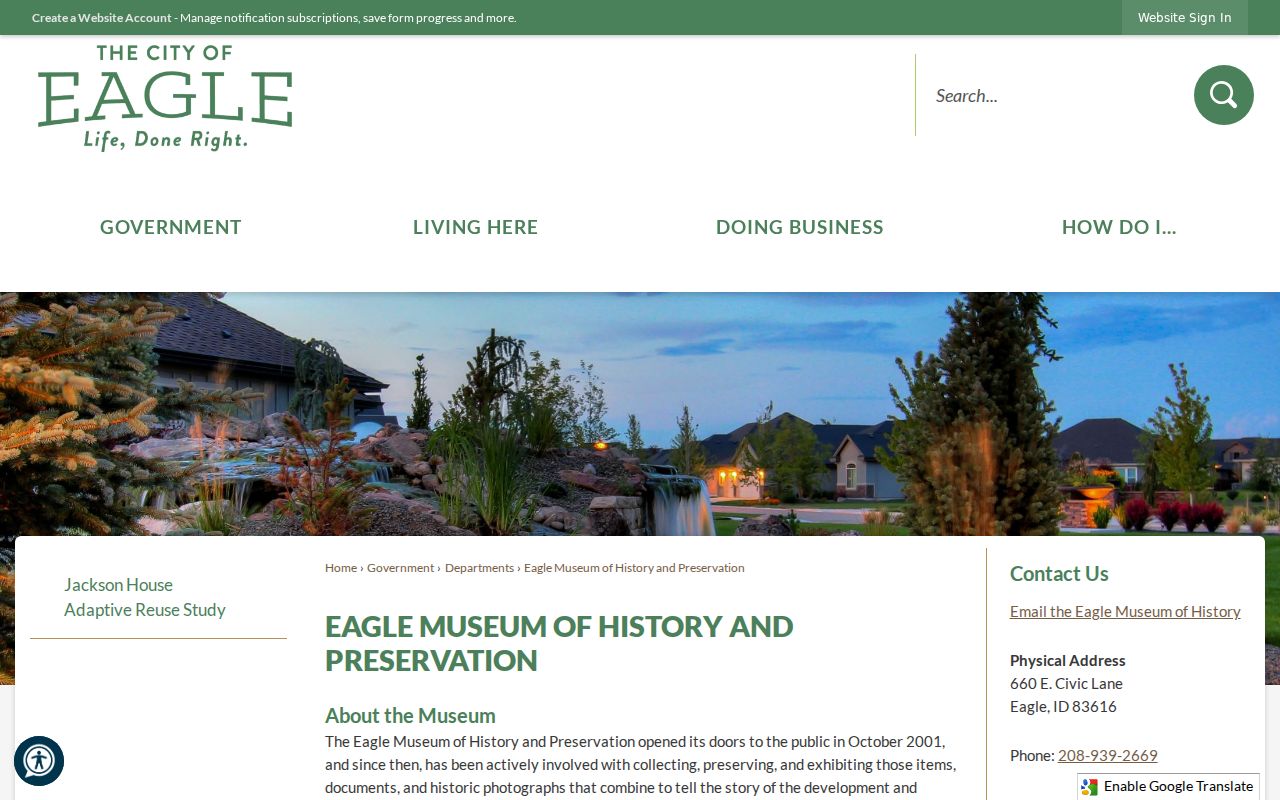
The Eagle Museum of History and Preservation keeps pamphlet files, historic photos, oral histories, and small specialized collections. It opened in 2001 and receives researchers by appointment. Published hours are Tuesday through Friday, 10 a.m. to 3 p.m., and Saturday, 10 a.m. to 1 p.m.; call 208-939-2669 before visiting.
The linked museum page shown below is the starting point for an appointment and a precise request.
Oral history is memory evidence, so compare it with a dated directory line, deed, paper, or map. The city's walking tour also anchors local stories to older sites, including the Methodist church and Bushnell-Fisher House, while reminding visitors to respect private property.
Eagle Names in Archive Indexes
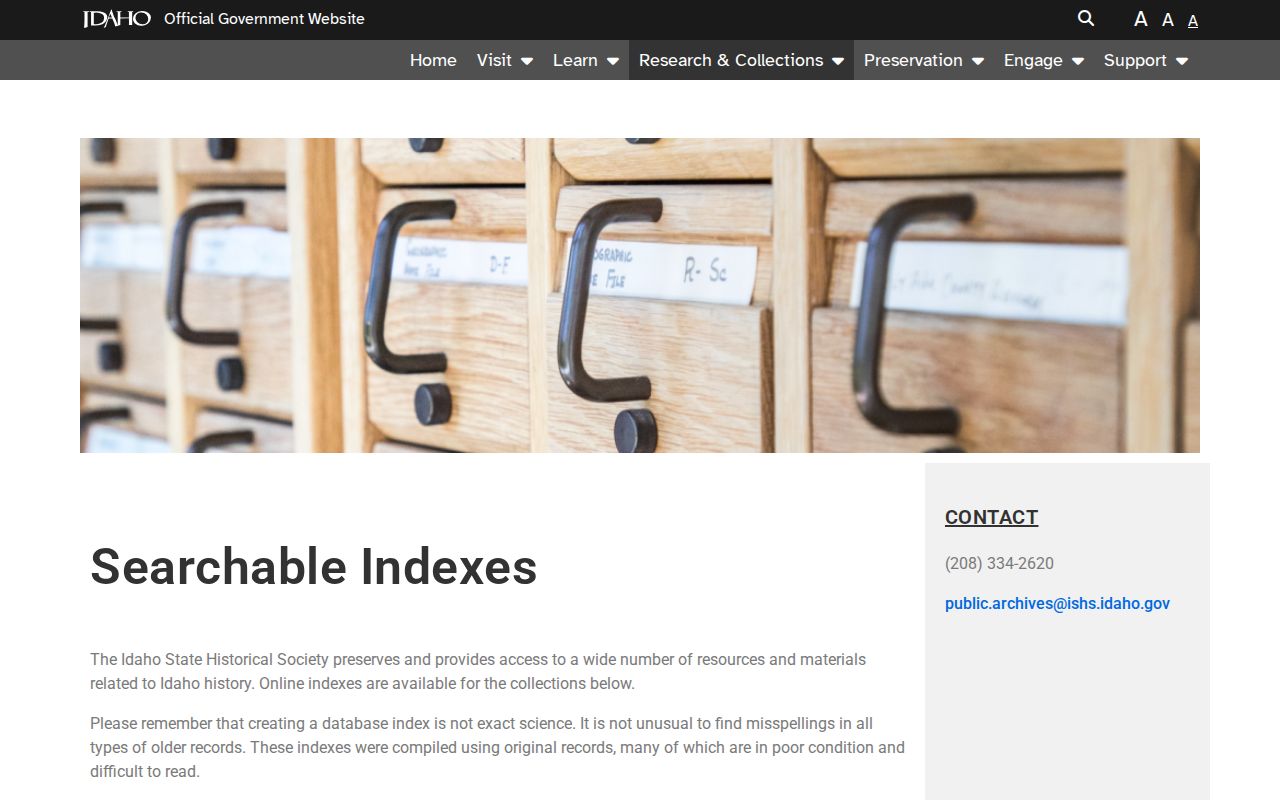
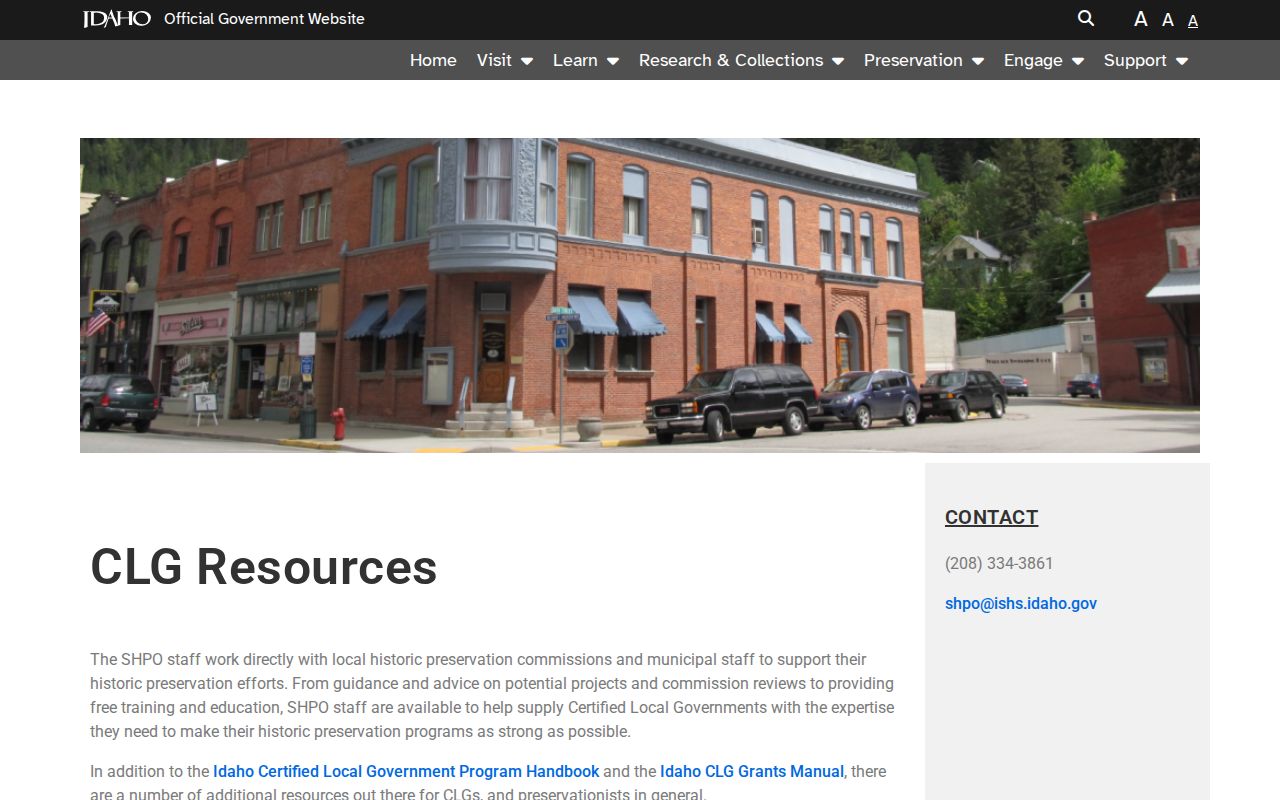
The Idaho State Archives searchable indexes extend a city directory search beyond printed books. The Idaho Biographical Index draws names from histories, papers, periodicals, and some Boise directories. The reconstructed 1890 Idaho project uses records dated 1885-1894, including land, tax, court, vital, naturalization, and probate sources, to bridge the lost federal census schedule.
This official index page shows the range of named collections available for a follow-up search.
The Archives also describes yearbooks from 1909-2006 and census schedules. The 1950 census is the newest decennial census publicly released under the 72-year rule as of 2026. Later census schedules are not open, so telephone books, papers, permits, and other dated records must bridge the newer years.
The State Archives collection guide shows the broader research-library route.
Trace Families Through Eagle Directories
Follow the record year by year. Do not jump from one directory line to a claim of lifelong residence. A solid family-history trail tests the name, the address, and the date against independent sources.
- Find the earliest likely surname entry and record its exact spelling, year, page, and locality.
- Check the next available volume for the same person, spouse notation, work, and address.
- Use the cross-reference section to inspect the address and nearby household names.
- Pair the closest public census year with the directory date, allowing for a move between enumeration and canvass.
- Use newspaper, obituary, probate, or cemetery evidence to explain a disappearance without guessing.
For a modern address-keyed search, the Eagle street directory workflow takes over where the historical shelf ends. Keep both trails dated. A current parcel owner and a person listed in an old telephone book answer different questions.
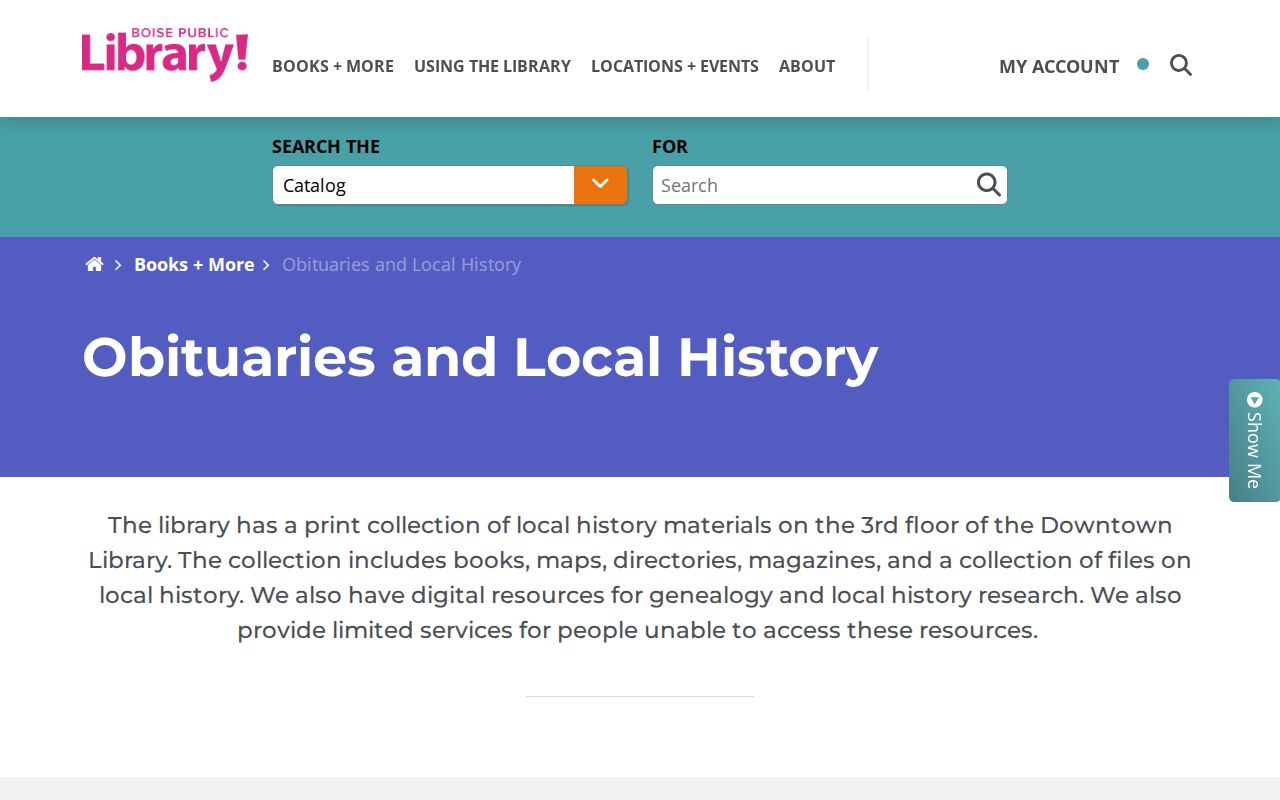
The Boise local-history page is the practical place to check copy limits and request details.
Eagle Directory and Records Timeline
Local records span several systems because Ada County predates the city and Eagle grew from a small settlement into an incorporated place. The dates below show where the strongest source types enter the trail.
| Date | Research landmark |
|---|---|
| 1864 | Ada County was created; county records can predate Eagle city government. |
| 1891 | Boise Library's listed Polk directory run begins. |
| 1914 | The open Eagle Sanborn map supplies building context. |
| 1948 | The listed Boise telephone-book run begins. |
| 1971 | Eagle incorporated, changing how later city records are filed. |
Ada County later documented work to re-digitize and index historic Clerk and Recorder records from 1864-1996. Older evidence may therefore exist at a counter, on microfilm, or in an archive even when a web portal starts later.