
How Eagle Residents Are Found
Start any Eagle residents directory search from the fact already in hand. An address points first to the Ada County Assessor. A full name may fit the Recorder. It may also fit iCourt, a voter tool, or a public business record. An older address belongs in directories, newspapers, maps, and archives. None of these sources is a complete household list. Owners can live elsewhere, renters may never appear, and protected records stay closed.
Move from a broad lead to one record with a firm link to Eagle. Then confirm the match in a second, independent source. The strongest pairings join a parcel number or legal description with a recorded instrument. A case name paired with a county, a date, and an address works just as well.
- Search the county property roll by address, parcel, subdivision, and year. Open the parcel card and note the owner, situs address, mailing address, and legal description.
- Use the owner or prior party name in the Recorder index. Try spelling variants, initials, and both grantor and grantee roles.
- Check Idaho iCourt when a court case may confirm the person, county, filing date, or party role. A public index is not the whole case file.
- Use VoteIdaho for the voter's own record, or follow the Secretary of State request route for a permitted public voter report.
- For an older household, ask for the right directory year, obituary entry, newspaper run, census, or archive series instead of assuming all years are online.
Portals fail for ordinary reasons. When one does, try the counter, the phone, mail, a library request, an archive request, or a narrow Idaho Public Records Law request. An empty web result may simply reflect a technical limit, an index gap, or a protected record.
Offices Behind Eagle Resident Records
Eagle is an incorporated Ada County city. Boise holds the county seat. That split shapes every search. City Hall keeps the municipal side: permits, minutes, contracts, and fulfilled requests. County offices hold the property rolls, deeds, court files, and election records that do most of the work in a residents directory, while state agencies control certified vital records, statewide courts, licensing, businesses, and voter access.
The Recorder and the city offices open Monday through Friday, 8 a.m. to 5 p.m. The Assessor's public site takes an address but not an owner name. So the practical path runs from parcel to name index. The Eagle Clerk/Treasurer's office page gives the city address. It also covers the public-record route and the records-management role.
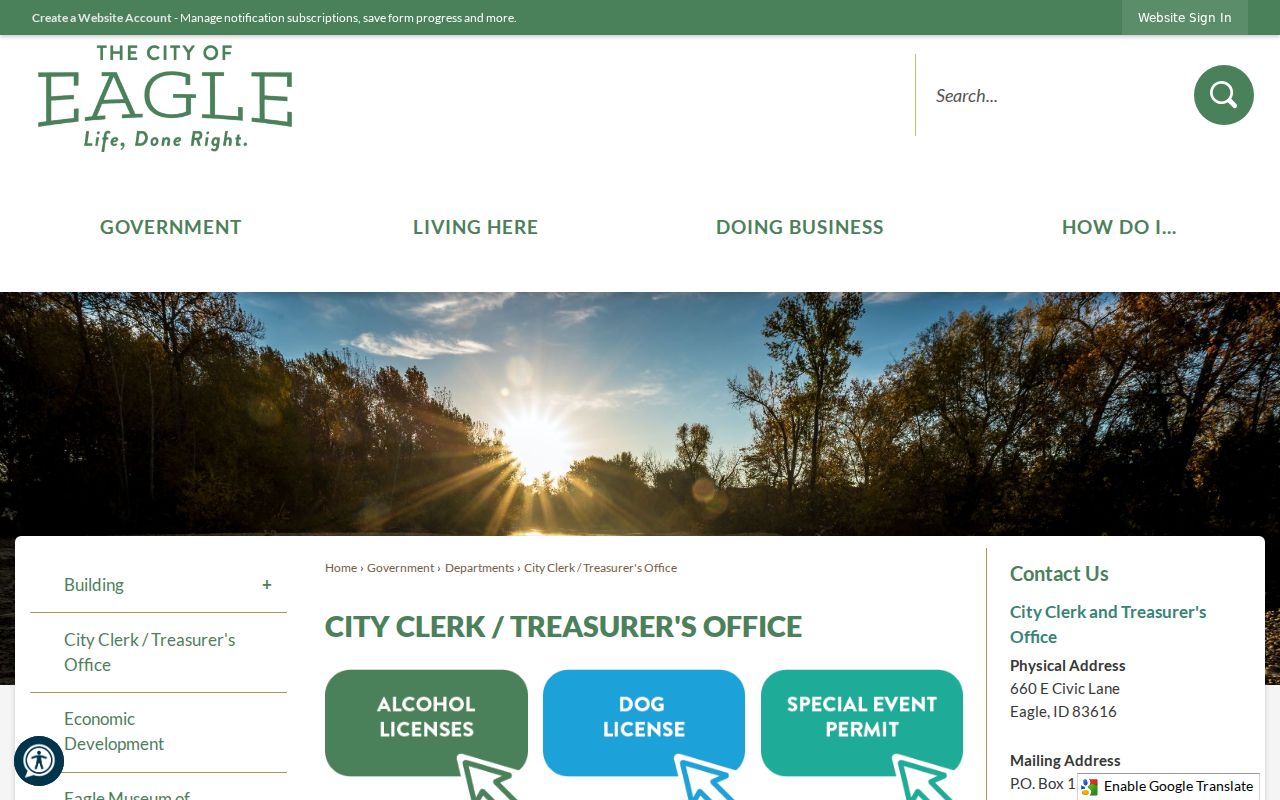
Laserfiche, Granicus, and the fulfilled-request archive do not hold everything. When a record is missing from all three, the Clerk can route a narrow city request.
Eagle Property Roll Search
For an Eagle street address, the Ada County Assessor Property Lookup is the best first stop. It links the address to a parcel and a legal description. The card also shows the primary owner, the tax-roll mailing address, a value year, property traits, and a map. Owner-name searching is left out on purpose. That local privacy quirk has a practical effect. Start by address, parcel, or subdivision. Then read the owner from the card that comes back.
| Search field | Accepted input | Use in an Eagle directory search |
|---|---|---|
| Address | All or part of number, direction, street name, and type | Find the parcel at a known Eagle site |
| Parcel | Full or partial county parcel number | Keep one property tied across systems |
| Subdivision | Full or partial subdivision name | Browse a named development without guessing streets |
| Year | Available assessment year | Check which year's property card is shown |
| Owner name | Not offered on the public site | Read the owner after opening a parcel result |
A situs address is where the parcel sits. A mailing address is where tax notices go. When the two differ, that proves nothing about where the owner actually lives, and the map serves assessment rather than any legal survey or fence-line decision. The live Ada property search shows the address-first entry point used for Eagle.
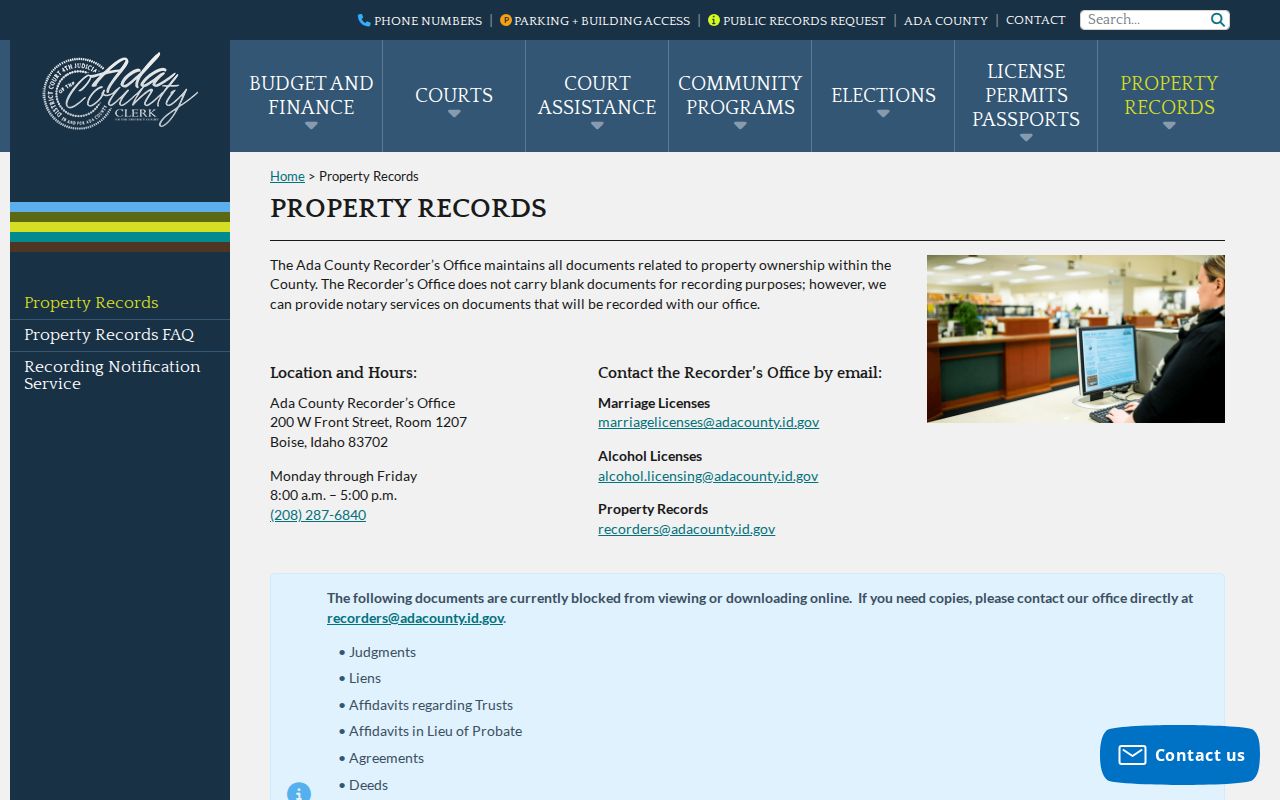
Deeds, not the parcel card, prove the transfer itself.
Eagle Deeds Link Names
The Ada County Recorder's Tyler index works like a public card catalog for recorded instruments. Coverage reaches back to 1982 online. Search fields include names, dates, instrument number, book and page, grantor, grantee, parcel, legal-description parts, and document type. The index is not the document. Remember that distinction. Some deed, lien, judgment, trust, probate, reconveyance, and power-of-attorney classes still need staff help even when the index entry is visible.
- Grantor
- The party transferring or granting an interest.
- Grantee
- The party receiving that recorded interest.
- Index
- A finding aid that points to an instrument, not a certified copy.
- Parcel
- The county identifier for a piece of assessed property.
- Legal description
- The lot, block, subdivision, or survey language that identifies land.
Older material sits at the Recorder counter, on microfilm, or at the Idaho State Archives. Ada County has described a project to redigitize and index records from 1864 through 1996. That project explains the gap. A web cutoff is not the start of county records. Ada County's property-records page explains the official search. It also covers the staff route.
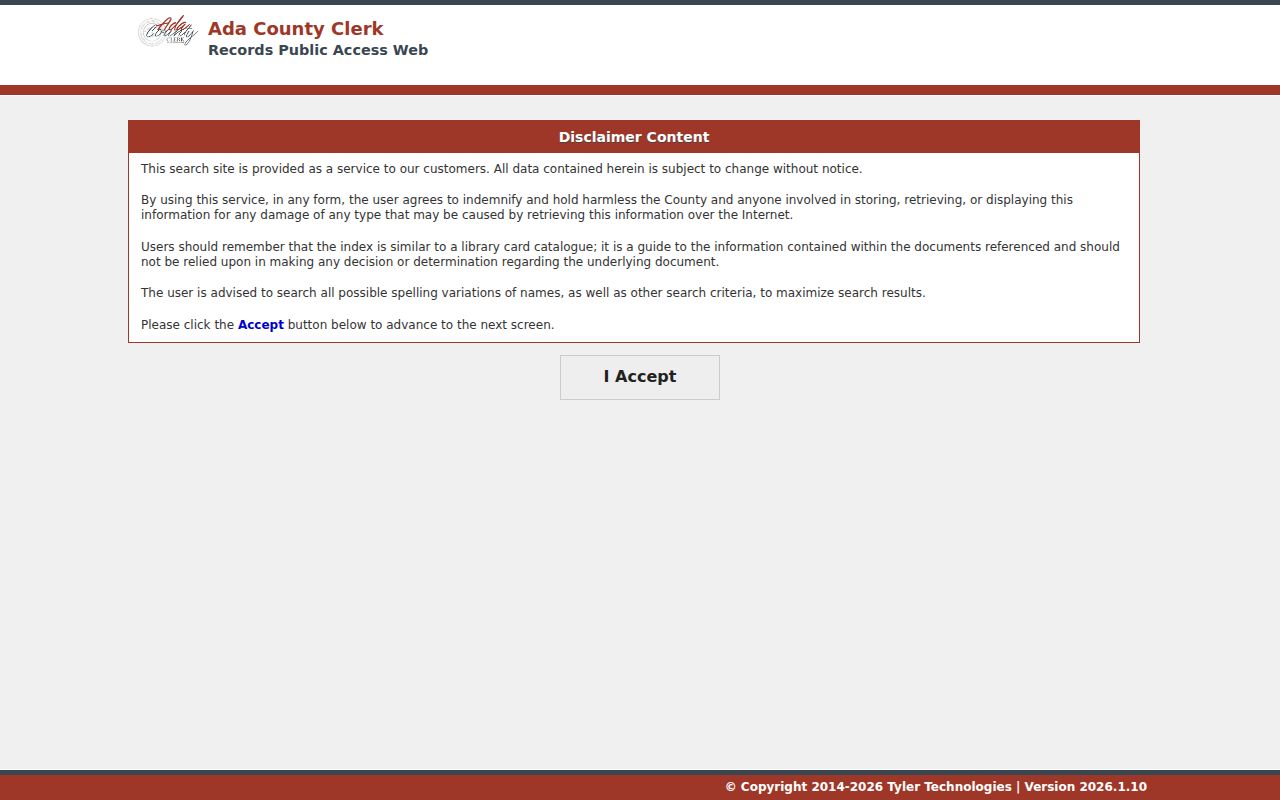
The portal entry opens the index only. Copies and certified records must come through the Recorder's approved access channel.
Current Eagle Residents Directory Sources
Current Eagle names live in separate official systems for separate reasons. The source has to match the question. Ownership belongs to the parcel roll and the deeds. Court involvement belongs to iCourt, registration belongs to election records, and a city staff or business listing shows a public role or affiliation rather than a home.
| Eagle source | People represented | Custodian | Access route |
|---|---|---|---|
| Property roll | Primary parcel owners | Ada County Assessor | Free address, parcel, subdivision, and year search |
| Official records index | Parties to recorded instruments | Ada County Recorder | Online index, counter, phone, and copies |
| Voter record | Registered voters | Idaho Secretary of State and Ada Elections | Personal lookup or permitted report request |
| iCourt | Parties in public Idaho cases | Idaho courts and Ada County Clerk | Smart Search, courthouse kiosk, or ICAR 32 request |
| City staff directory | Public Eagle staff contacts | City of Eagle | Category and name search |
| Business directory | Listed firms and public contacts | City of Eagle | Business name and category search |
Official sources explain why a name appears and who keeps it. Commercial people-finder products blend data from many places and may charge for uncertain matches. For a name-first process, use the Eagle resident lookup.
Eagle City Records Repositories
Three separate systems hold Eagle's city records, and each does a different job. Laserfiche keeps building permits and city documents. Granicus covers agendas, meetings, video, and archived searches. JustFOIA shows what past requests asked for and how the city answered. One system may come up empty. Try a topic search in the other two before filing anything new.
These records connect people to permits, contracts, campaign filings, agenda items, and civic roles. They never form a household roll. Weekly building-permit reports list an address, applicant, parcel, permit type, and date. Eagle cautions that older residential plans may be destroyed under its retention rules. Eagle's public-records hub names each repository and the request route.
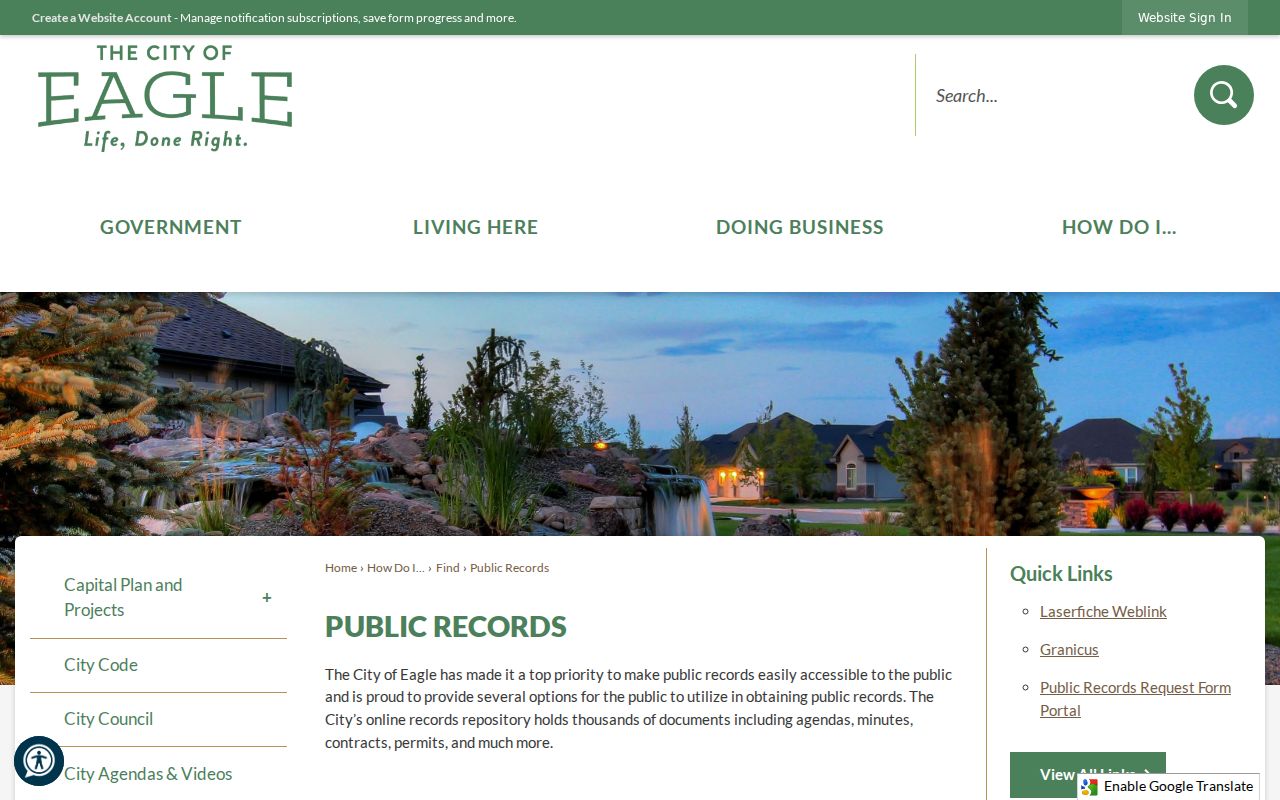
The hub keeps online collections separate from formal requests, which narrows the search and sends it to the right custodian. Eagle's fulfilled-request archive can show whether a similar request already got an answer.
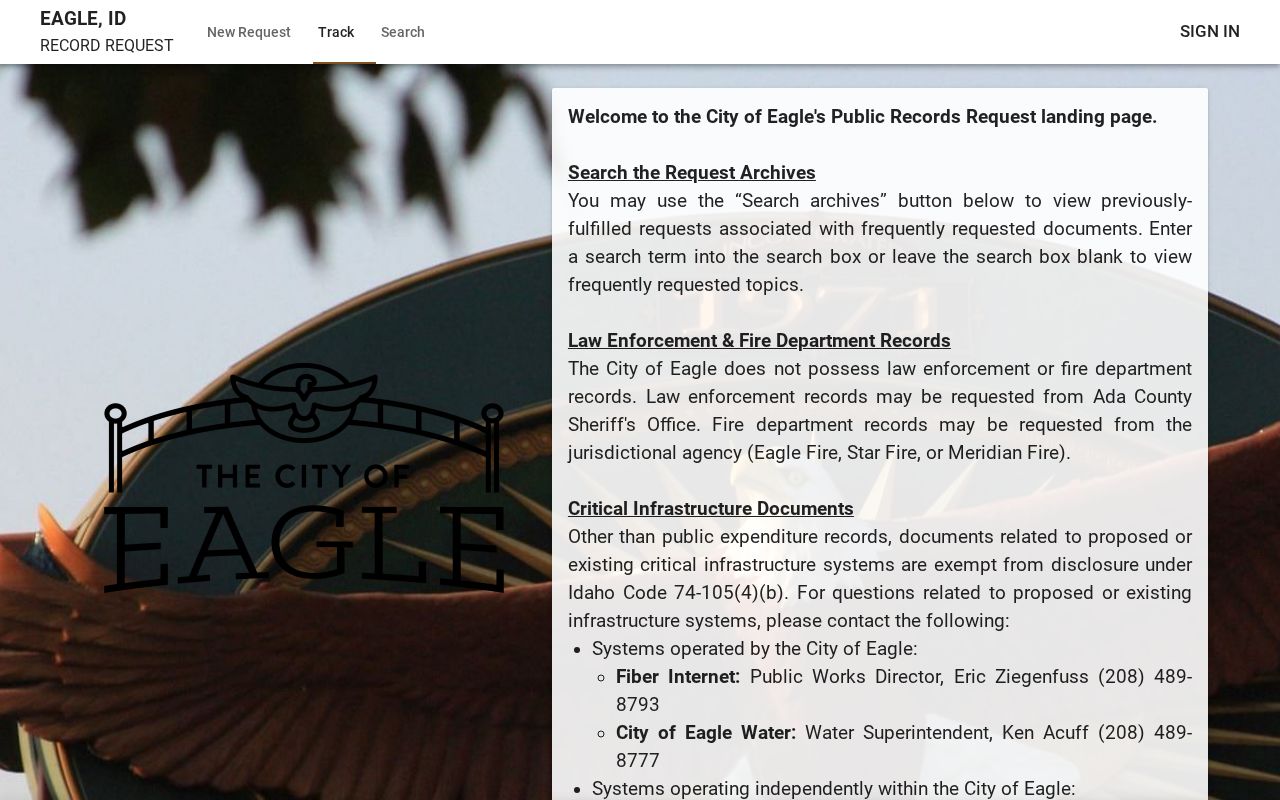
A past response may supply useful wording or reveal which city division held the file you need.
Idaho Court Names for Eagle
Idaho iCourt Smart Search opens statewide public case information, including Ada County. Search by name using the portal's name syntax and wildcards. Result tiles show party role, case number, court location, and filed date. They also list status, events, hearings, and public financial details. Sealed or restricted records stay closed even online.
If the site fails to load, several things could be behind it. iCourt needs JavaScript, cookies, and CAPTCHA. The portal itself warns of a modernization transition. For a complete public file, visit the Ada County Clerk at the courthouse. You can also use a public-access kiosk. Or file a request under Idaho Court Administrative Rule 32. The official Idaho courts entry sends Eagle searches to the current statewide portal.
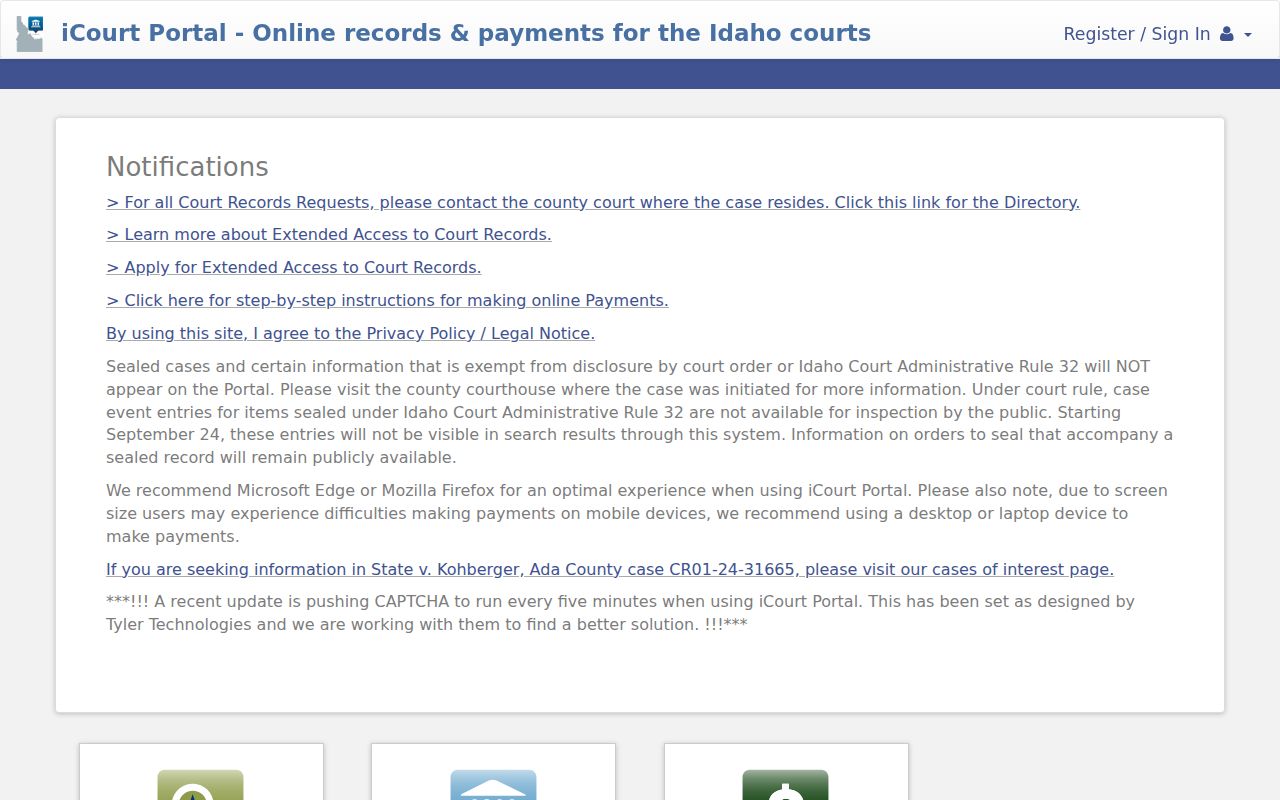
Use the statewide index to confirm a case lead. It cannot distinguish one person from another with the same name.
Eagle Voter Record Boundaries
VoteIdaho offers a “Check Your Voter Record” tool, but only for a voter's own registration. Public voter-file and history reports require the Secretary of State's request form. Public fields include name, residence address, mailing address, party, precinct, registration date, status, participation history, and voter identification number. Some data stays limited by law. It also depends on the report requested. The signed card and protected data never appear as a simple web directory.
Idaho's Address Confidentiality Program gives qualifying survivors a substitute mailing address and confidential voter handling. A missing address can reflect a safety rule, not a failed search. Use voter information only for lawful civic or personal purposes.
Eagle resident records must never be used to stalk, harass, threaten, or harm anyone. Respect sealed files, protected addresses, and custodian limits.
Requesting Missing Eagle Records
Idaho Public Records Law, Title 74, Chapter 1, governs these requests. It applies to city, county, and state custodians. Eagle generally owes a response within three working days. Extensions to ten working days are permitted when more time is needed. The custodian may ask for a clearer description or apply lawful exemptions. The custodian may also discuss fees for a large request.
Describe the record precisely. Name the office, record type, date span, address, parcel, case, or instrument. Ask for an existing record rather than a broad question. City material starts with the City Clerk and its repositories. Deeds belong to the Recorder. Court files belong to the Clerk. Parcel details belong to the Assessor, and state records to the agency that created them. The Idaho Attorney General's records guidance explains rights, exemptions, fees, and the custodian process.
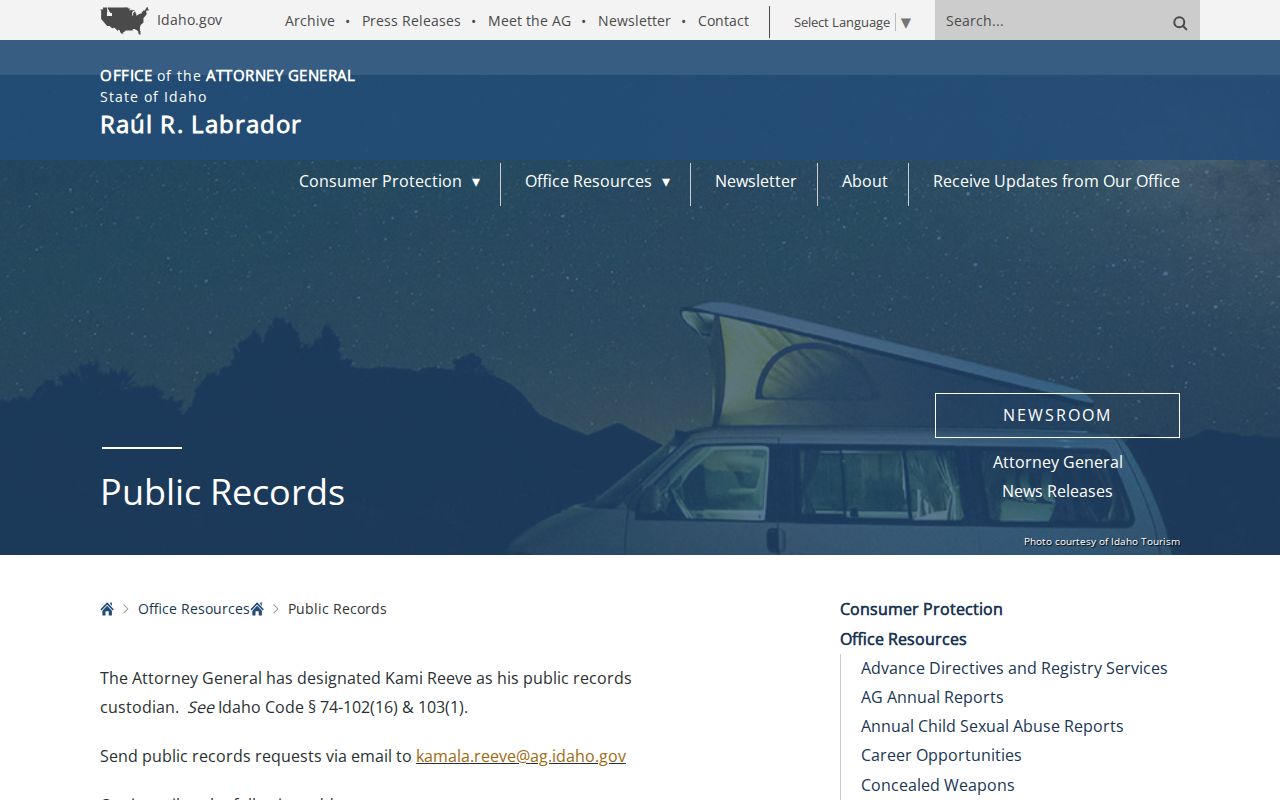
That guidance helps frame a focused request and shows why one state form cannot replace the record holder's own process. Idaho's Department of Administration request form displays the identity, contact, record-description, residency, fee, and timing fields that agency uses.
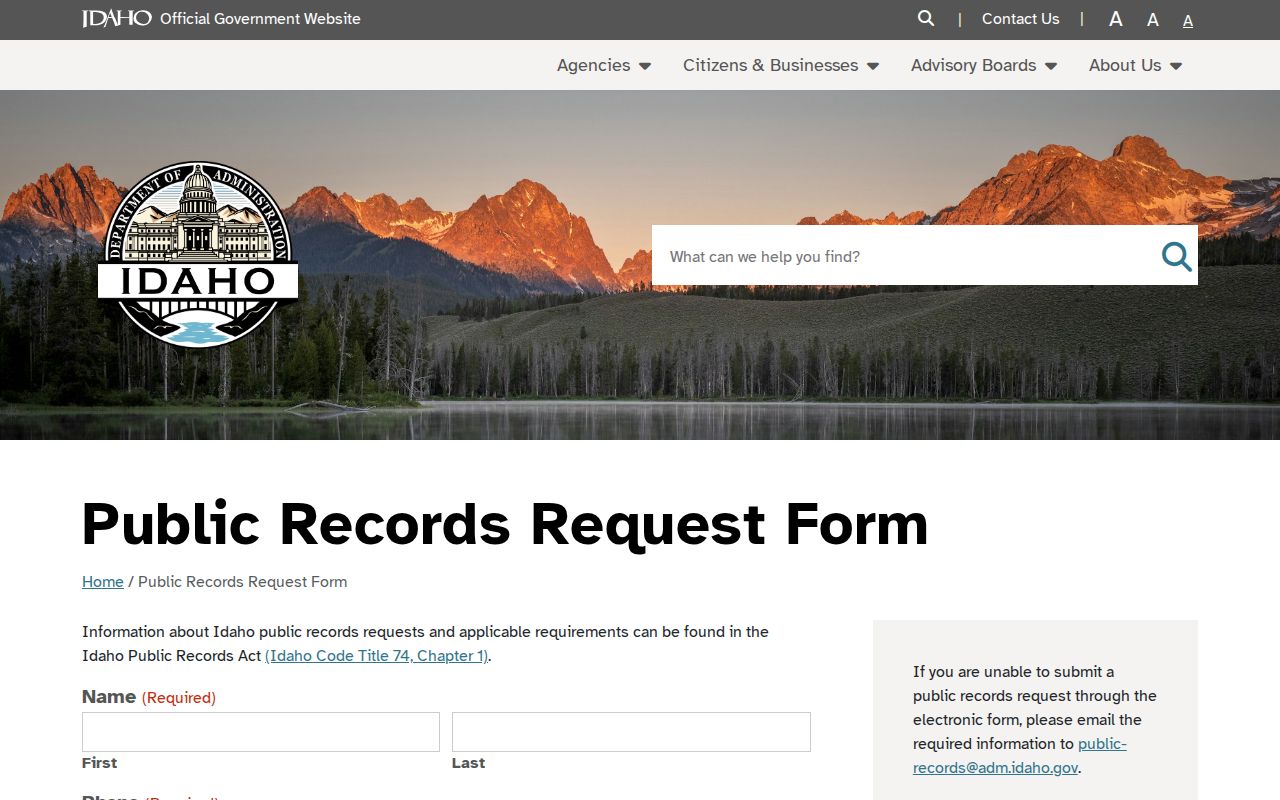
Send that form only for records the department holds. Eagle and Ada County records stay with their local custodians.
Eagle ZIP and City Lines
Eagle's official sources identify ZIP code 83616, including the Eagle Post Office. A postal city and a ZIP describe mail delivery, not incorporation. An address labeled “Eagle, Idaho” can sit outside the city boundary. Compare USPS normalization against the Ada County city-limits or tax-code layer before deciding which government holds a permit or city record.
County GIS fields may carry ZIP+4, street-grid, and local address data. The parcel card gives the situs and legal description. Each key does different work. For moving from an address into title records, the legal description and parcel number usually beat a mailing label for stability.
Historical Eagle Residents Directory
Eagle's historical directory shelf is regional. The University of Idaho's guide handles the city with a single line, "Eagle | See Boise," sending researchers down the valley. That referral leads to real depth. Boise Public Library's local-history room keeps Polk city directories from 1891 to current, telephone books from 1948 to current, and Hill-Donnelly cross-reference volumes.
Criss-cross volumes flip the arrangement. Entries sit grouped by street or phone number rather than by surname alone. The same room offers an obituary index covering 1957 through 2017, along with maps, newspapers, and staff help with requests. Copies cost $1.25 per page. The weekly cap is five pages, while obituary or article requests run $5.25, with four permitted each week. Name a precise year. Adding the locality, name, and page whenever possible makes retrieval far faster.
The Idaho State Archives layers on county and city records, microfilm, census, naturalization files, newspapers, and reconstructed indexes, while Eagle Museum preserves local photos, pamphlets, oral histories, and walking-tour context, all explored in the Eagle city directory research.
Eagle Records Across Time
A 1914 Sanborn map survives in digitized form. It supplies building footprints and use context, while the modern Ada GIS adds parcels, value-year data, zoning, and legal descriptions. Neither proves who occupied a building. Pair the map with a directory year, a deed, a newspaper item, an obituary, a census entry, or a city permit to build a defensible timeline.
Eagle's newspaper record is not continuous. Eagle Enterprise material survives for 1926 and for 1958 through 1960, Valley Free Press for 1982, and Eagle Post for 1988 through 1989. A blank year is a collection gap. It is not proof that no notice was printed. The 1950 census is the newest federal population count open under the 72-year rule. Idaho's reconstructed 1890 index gathers its leads from records created between 1885 and 1894.
Safe Eagle Directory Checks
Public records get copied into scams. Idaho courts have warned about fake court-record, jury, and payment messages, and state officials have described impersonation calls involving Ada County. Never call back a number an unsolicited caller supplies. Verify any demand through the agency's published contact page instead of through a link the caller provides.
Freshness matters too. Check the year on a property card, the filing date on a case, the recording date on an instrument, and the update notice on a roster. Confirm important facts with the custodian first. For safety planning, Idaho's Address Confidentiality Program explains the substitute-address process.
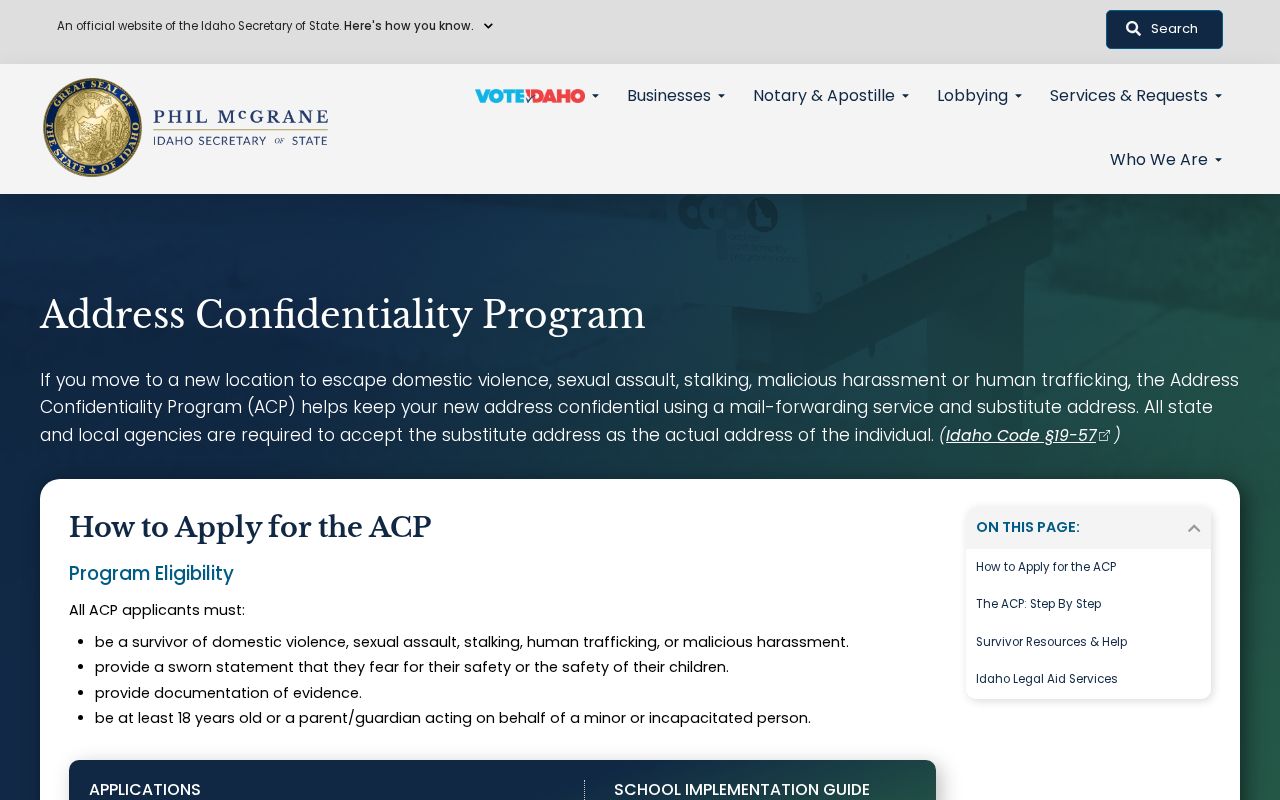
Official Eagle directories may lawfully mask a home address.