
Eagle Previous Residents by Era
The right source depends on the date. Modern deeds are searchable online, while older Eagle evidence may require a county counter, microfilm, a library request, or the Idaho State Archives. The table distinguishes ownership records from sources that can name occupants.
| Source | Years It Covers | Where Held | What It Shows |
|---|---|---|---|
| Ada Recorder online index | Jan. 1, 1982 to Aug. 9, 2026 when inspected | Tyler portal | Parties, instrument, date, type, and legal-description search |
| Historic deed books | County records described from 1863 | Recorder, microfilm, Archives | Earlier transfers, liens, deeds, and plats |
| Polk and telephone directories | 1891-current; 1948-current collection listings | Boise Public Library | Dated name, address, occupation, or telephone clues |
| Sanborn map and census | 1914 Eagle sheet; public census through 1950 | University of Idaho; NARA/library | Building context and household composition |
| Eagle permits | Weekly year folders; plan retention varies | Laserfiche and City Clerk | Construction, alteration, and certificate dates |
For a recent question, start with the Assessor and deed index. For a mid-century occupant, pair a directory year with the closest open census. For a structure from Eagle's early years, combine the 1914 Sanborn map with deeds, newspapers, and museum or archive material.
Start Eagle House History Today
Enter the situs address in the Ada County Assessor Property Lookup. Copy the parcel number, exact legal description, primary owner, mailing address, subdivision, and assessment year. The public site searches by address, parcel, subdivision, and year, but not by owner name.
A different mailing address is a tax-correspondence clue, not proof that the owner lives elsewhere. Trusts, estates, companies, and condominium units can also change the name pattern. Keep the parcel and legal description as the stable keys for tracing previous residents when personal names or street text shift.
Trace Ada Deeds Backward
The Ada County Recorder deed index supports names, dates, instrument number, book and page, grantor, grantee, parcel, document type, and legal-description parts. Its online date range is the modern lane, not the start of Eagle ownership records.
- Pull the current owner, parcel, and legal description from the Assessor.
- Find that owner's purchase deed, then record its instrument number, date, legal description, grantor, and grantee.
- Search the seller as an earlier grantee to locate the prior purchase. Try spelling and entity-name variants.
- Repeat the process while tracking branches through trusts, estates, corrected instruments, or foreclosures.
- Before the online cutoff, ask the Recorder counter, consult deed books or microfilm, and request help from Idaho State Archives.
- Grantor / grantee
- The grantor transfers an interest; the grantee receives it.
- Chain of title
- The ordered series of recorded transfers for one parcel.
- Legal description
- The lot, block, subdivision, or survey wording that can outlast a street-name change.
The successful capture of the grantor and grantee search shows the portal used to step seller by seller.
Those party roles, dates, and parcel terms keep the backward trail tied to recorded evidence.
Eagle Previous Residents Despite Address Drift
Ada County uses four addressing grids and a central zero point. New lots receive sequential numbers after a final plat, and changes may occur when access, sequence, or odd-even rules require them. No verified citywide Eagle renumbering year was found, so an old address failure should not be blamed on a made-up change date.
Bridge a gap with the subdivision, lot and block, legal description, street-direction variants, old city or ZIP wording, nearby landmarks, and newspaper references. The Ada plats and surveys search is especially useful when the current street line no longer matches an older source.
The plat search carries the land description across changes that can break a simple street lookup.
Eagle in 1914 and 2026
The University of Idaho Sanborn collection includes a 1914 Eagle sheet. It can show a building footprint, use, materials, setbacks, and street context. A current GIS parcel record instead shows a parcel identifier, legal description, zoning, value, acreage, assessment year, and geometry.
Neither source alone names everyone who lived there. The map contrast is useful because it separates structure history from resident history. Match the old footprint to deed, directory, census, newspaper, and permit dates before attaching a household name.
Eagle Permits Mark House Changes
Eagle building-permit reports are organized by year in Laserfiche. A report may establish a project, address, permit type, applicant or contractor, and date. It is not an occupant roll, but it can explain when a structure changed between deed or directory entries.
Older residential plans may be destroyed after the city's retention trigger even when a permit report remains. The successful permit-page capture shows the official route to the annual folders.
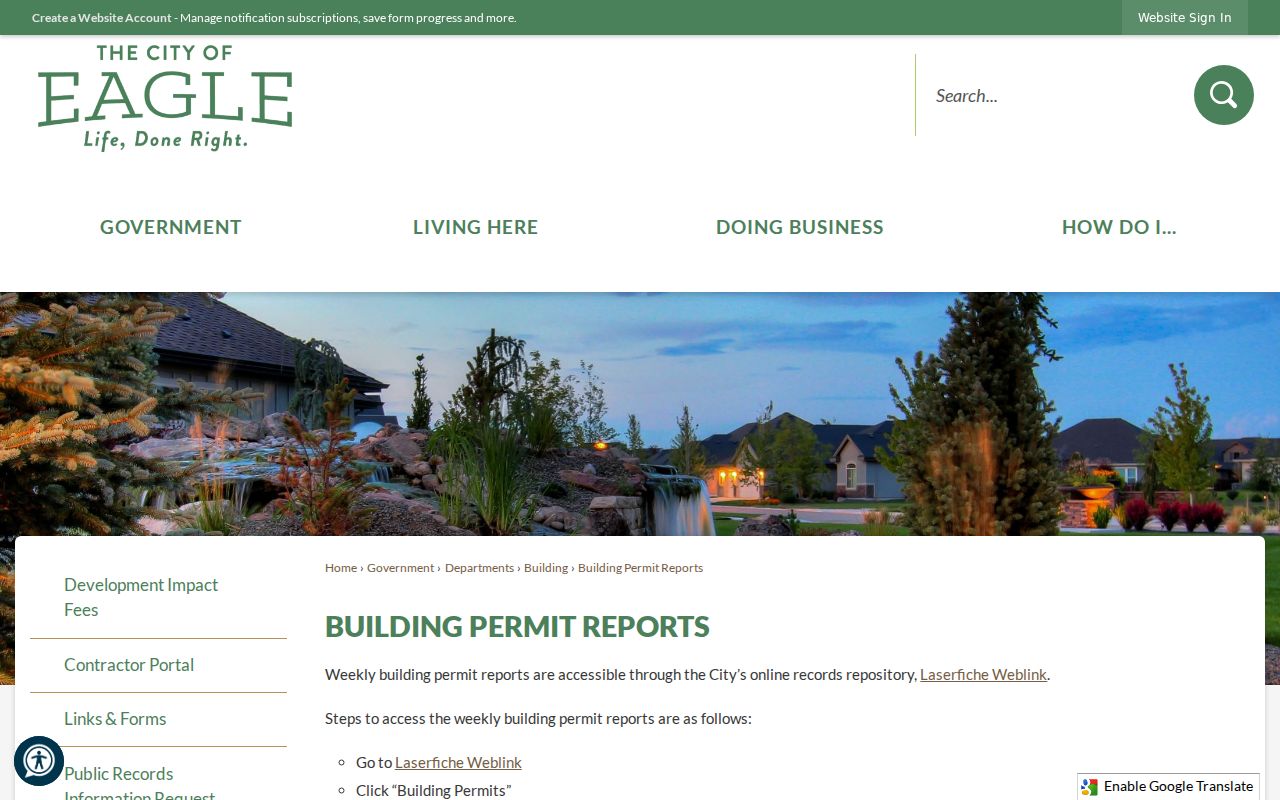
When a plan set is gone, request the surviving index, report, certificate, or related public record from the City Clerk.
Older Eagle Records Beyond Tyler
The Recorder portal displayed coverage from January 1, 1982 through August 9, 2026 when inspected. Ada County records are described from 1863, and a county project sought to redigitize and index historic material from 1864 through 1996. Those facts explain why a pre-1982 deed may exist even when the web search does not return it.
Call the Recorder at 208-287-6840, visit the 200 W Front Street counter, or use a narrow written request. The Idaho State Archives Research Library provides county records, microfilm, newspapers, census materials, and research requests. Do not treat an online cutoff as an evidence cutoff.
Eagle Previous Residents in Households
Owners are only half the story. Boise Public Library lists Polk directories from 1891, telephone books from 1948, and Hill-Donnelly cross-reference volumes. Coverage must be checked volume by volume because Eagle is treated regionally. The collection details belong on the Eagle city directory page; for house history, use the address entry as dated occupant evidence.
Pair a directory year with the closest federal census through the publicly released 1950 schedule. Copy the exact address, household names, relationships, ages, and occupations, then compare the next directory year. One missing entry can reflect a move, omission, changed number, or collection gap.
- Start with the best dated address entry.
- Find the matching census enumeration area and household.
- Compare names and ages with the directory before and after the census.
- Resolve deaths or departures through newspapers, the obituary index, probate, and recorded estate transfers.
The Idaho Statesman obituary index covers 1957 through 2017. Eagle newspaper microfilm is discontinuous, including short Eagle Enterprise, Valley Free Press, and Eagle Post runs. A missing year means the collection has a gap, not that no notice existed.
Boise Library limits directory copies to five pages per week and obituary or article requests to four per week. Give staff a precise year, volume, address, and likely surname so each request advances the trail.
Lawful use. Research Eagle previous residents for house history, family history, estate work, or personal curiosity. Never use these records to track, harass, or harm a living person.